Madhya Pradesh’s ambitious Sleemanabad Tunnel project, hailed as one of the state's greatest engineering achievements, is on the verge of completion. The state’s Chief Minister (CM) Dr Mohan Yadav on Friday inspected the nearly finished tunnel in Katni district on Thursday, describing it as a transformative project that will change the agricultural landscape of the Vindhya-Mahakoshal region.
Once operational, the 11.952-km-long tunnel will provide permanent irrigation to nearly 2.45 lakh hectares of farmland across around 1,450 villages in Jabalpur, Katni, Maihar, Satna, Rewa and Panna districts, significantly boosting agricultural productivity and improving farmers’ livelihoods.
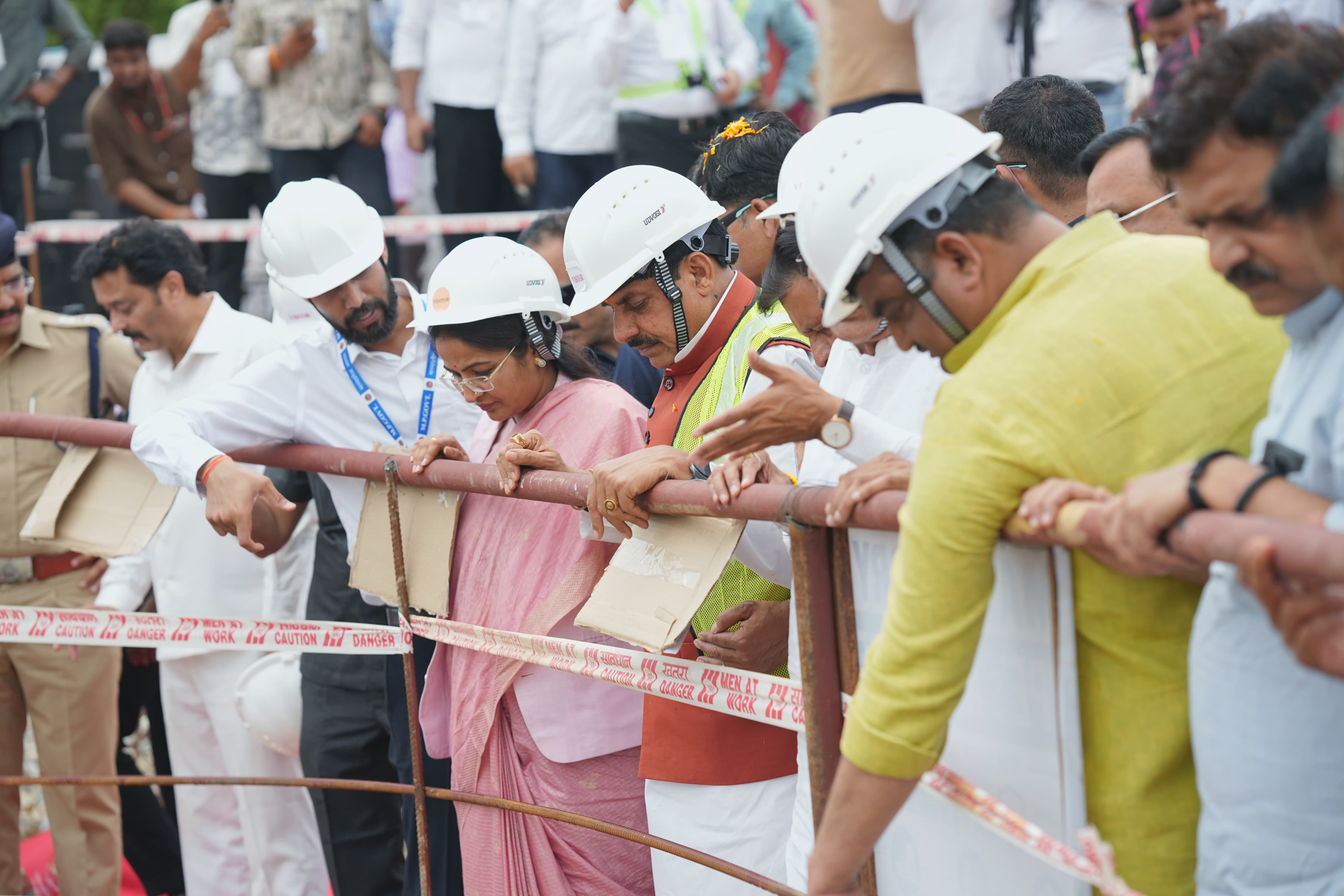 MP CM Dr Mohan Yadav taking stock of the nearly-complete tunnel
A long and challenging journey
Speaking during the inspection, the Chief Minister said the tunnel was constructed in three eight-hour shifts. Although 1,406 metres of boring had been completed by 2015, progress remained slow. In 2016, excavation from the upstream end began using an advanced tunnel boring machine imported from Germany, accelerating the pace of construction despite formidable geological challenges.
CM Dr Yadav noted that engineers, technicians and workers overcame years of technical and safety-related obstacles before bringing the project close to completion in 2026. He revealed that after a new government assumed office in 2023, the contractor had withdrawn from the project, leaving behind ageing machinery. Construction, however, continued using a single machine until the work resumed at full pace.
MP achieves a scientific feat
Calling the tunnel "a marvel of science and engineering", the Chief Minister said it would carry Narmada waters by gravity into the Son River basin, bringing irrigation to water-scarce regions of Katni, Satna, Rewa, Maihar and Panna.
He said the nearly 12-km tunnel would become a landmark engineering case study in the future. Built to withstand even severe earthquakes, the structure is designed to remain secure for at least 100 years. At certain stretches, the tunnel runs nearly 120 feet below ground level.
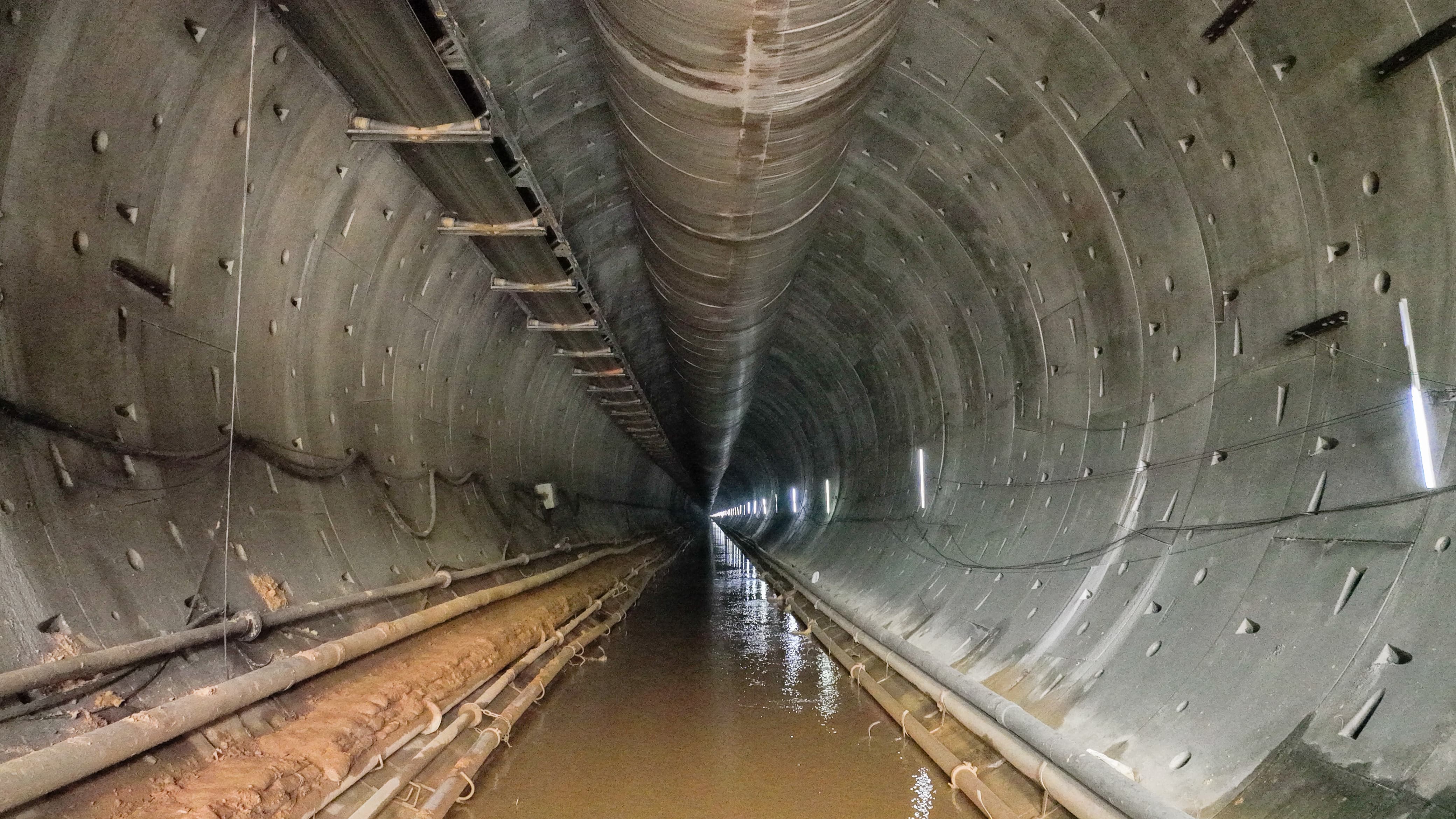 Sleemanabad Tunnel
CM Dr Yadav thanked Prime Minister (PM) Narendra Modi for the Centre's financial support, stating that the Union Government contributed around ₹275 crore towards the project's total cost of approximately ₹1,600 crore.
Boost to irrigation and rural economy
The Chief Minister said the project would prove to be a major gift to farmers during the state's Farmer Welfare Year. Within the next three months, irrigation water is expected to become available for nearly one lakh hectares for the upcoming rabi season.
Besides expanding irrigation, the project is expected to improve drinking water availability and facilitate power generation at select locations. CM Dr Yadav urged farmers not to sell their land, expressing confidence that the region would emerge as one of the country's most productive agricultural belts, reducing migration and strengthening the rural economy.
He also highlighted the state's expanding irrigation network, saying Madhya Pradesh's irrigated area has grown from 7.5 lakh hectares in earlier years to 44 lakh hectares, and further to 65 lakh hectares over the past two-and-a-half years.
Overcoming extraordinary engineering challenges
The tunnel transports Narmada waters through the Vindhya mountain range solely through gravity, eliminating the need for electricity or heavy pumping systems. Engineers had to bore through a 40-metre-high ridge while dealing with hard marble, limestone and dolomite formations, massive underground limestone caverns, sudden soil collapses and water inflows of up to 25,000 litres per minute.
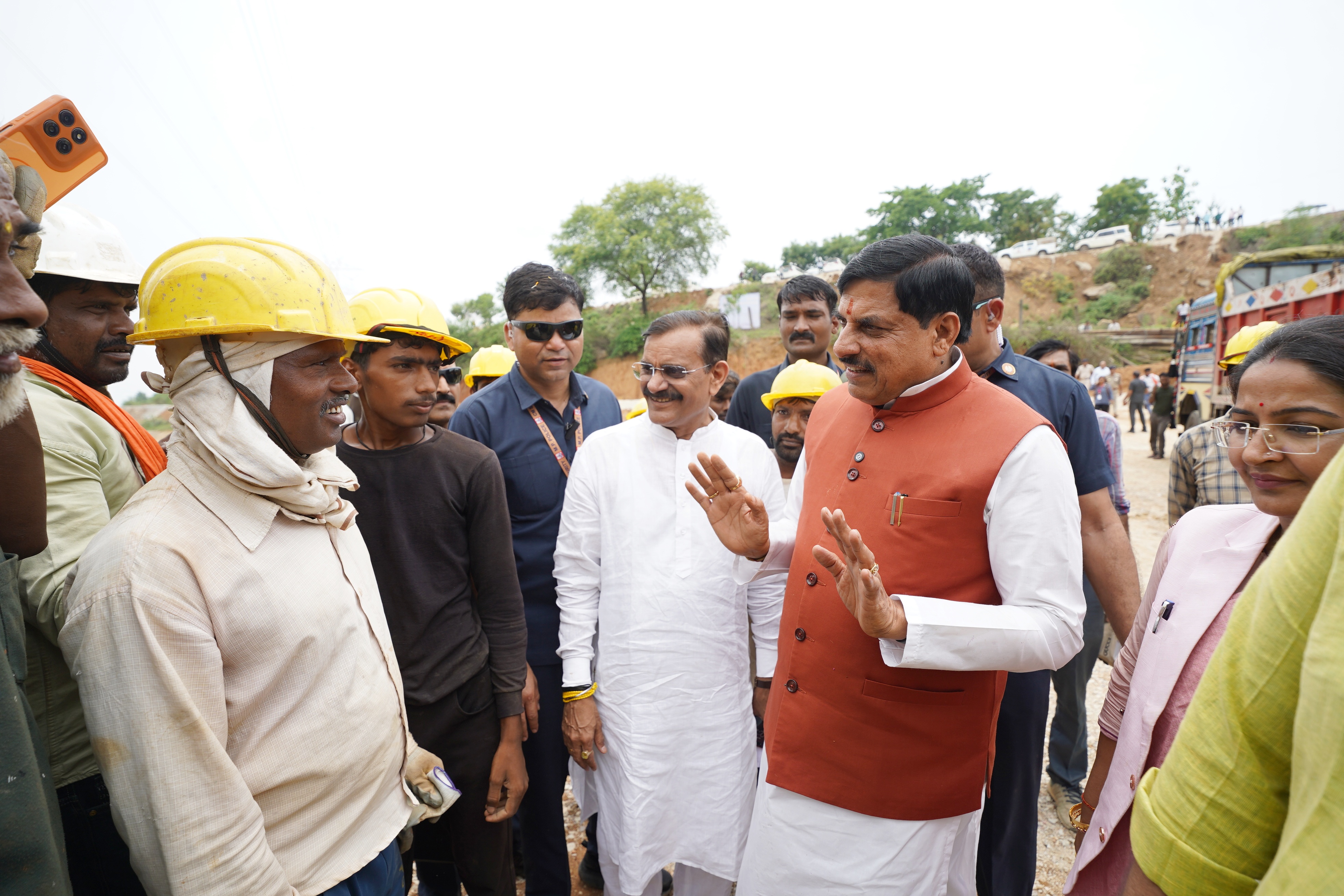 MP CM Dr Yadav interacting with the construction workers
An American tunnel boring machine deployed during construction broke down under the extreme conditions, after which a state-of-the-art German Herrenknecht machine and specialised TAM grouting technology were introduced. Despite passing beneath densely populated areas, a National Highway and railway tracks, the construction was completed without causing any damage on the surface.
How much is the cost of the project?
The project was awarded in 2008 to Hyderabad-based construction agency Patel-SEW (Joint Venture) with an initial estimated cost of ₹799 crore. Owing to severe geological conditions, specialised engineering interventions and the adoption of advanced technologies, the expenditure has risen to ₹1,610.47 crore.
According to officials, 96.66% of the contract work has been completed. Construction of the 12.135-km open-cut canal and the 11.952-km main tunnel has been completed in full.
The state government's roadmap envisages irrigation coverage of 87,433 hectares by December this year and 1,54,693 hectares by December 2027. In addition, water from the tunnel will support irrigation projects covering another 30,307 hectares, making it one of Madhya Pradesh's most significant water resource initiatives.