The Supreme Court (SC) on Thursday expressed concern over the Central Board of Secondary Education’s (CBSE) decision to introduce a compulsory 3rd language for students promoted to Class 9, noting that the move places unnecessary academic pressure on pupils preparing for their secondary board exams.
Justice BV Nagarathna of the top court, while hearing a matter related to the establishment of Jawahar Navodaya Vidyalayas (JNVs) in Tamil Nadu, remarked that any additional language should ideally be introduced from Class 6 rather than at the beginning of secondary school.
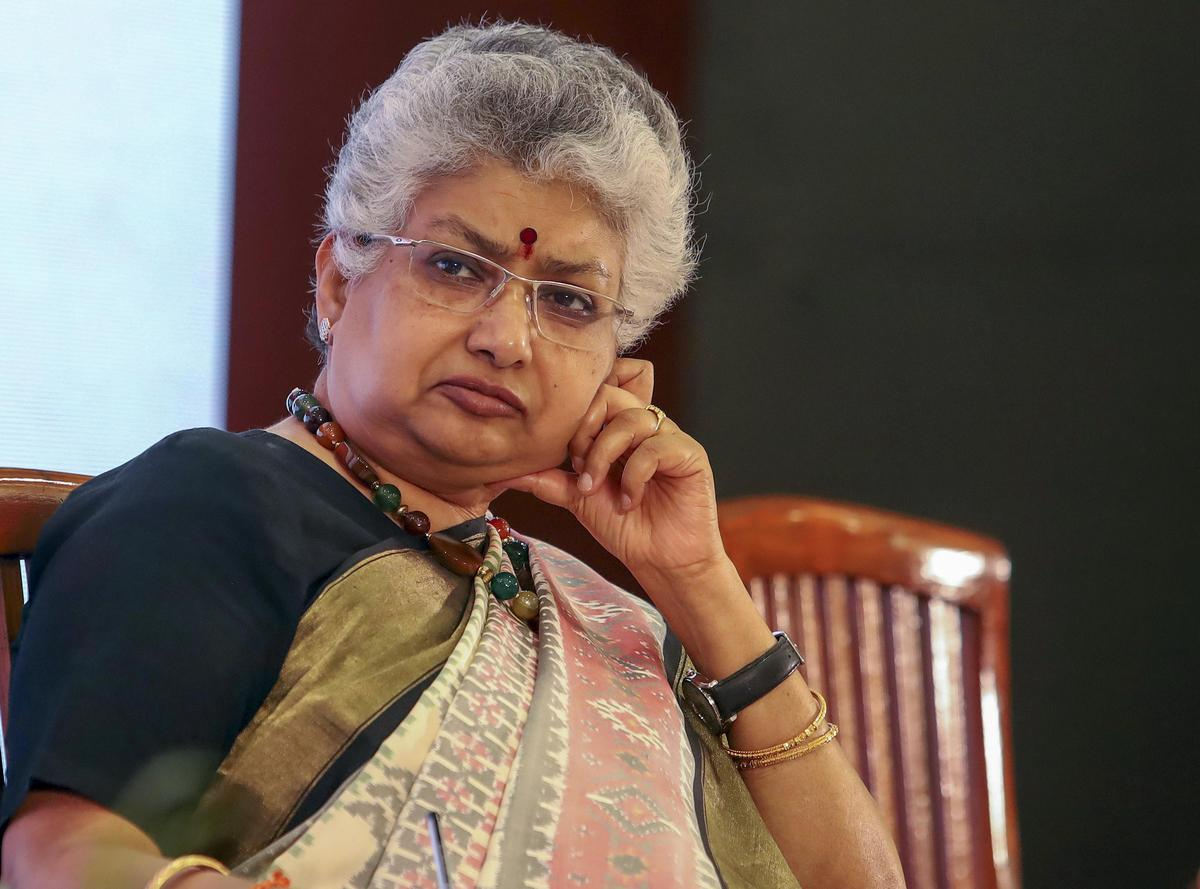 Justice BV Nagarathna
He said, “9th standard is stressful. Why do you introduce a new language in 9th? You introduce it in 6th,” underlining that students already face mounting academic pressure from the end of Class 8 as they prepare for their Class 10 board exams.
Court’s observations come after CBSE grants one-time relief
The apex court’s observations hold immense significance as they come just weeks after the CBSE announced a one-time relaxation for the current batch of Class 9 students. Following widespread concerns raised by schools, parents and students over the abrupt implementation of the triple language policy, the Board exempted the present cohort from being assessed in the third language during the Class 10 board examination.
The issue stems from a circular issued by the CBSE on May 15, 2026, which directed affiliated schools to make three languages compulsory for Class 9 students from July 1, 2026, despite the revised curriculum originally proposing a phased implementation beginning from Class 6. Schools were even advised to use Class 6 third-language textbooks temporarily until dedicated material became available.
Judge recalls personal school experience
 Representative image
Reflecting on her own educational experience, Justice Nagarathna said students in her school began learning a third language during middle school, allowing them sufficient time to gain proficiency before entering secondary education.
She remarked, “The earlier, the better,” recalling that students of her generation had already begun preparing for Class 10 exams while in Class 8 owing to the demanding nature of board exams.
She addressed the Union government directly, urging educational authorities to avoid introducing a new language at the Class 9 stage, saying that students should not be burdened with additional academic responsibilities during a crucial phase of their schooling.
Language policy not under direct challenge
Although the constitutional validity of the CBSE’s three-language policy was not before the bench, the discussion arose during the hearing of Tamil Nadu’s appeal against a 2017 order issued by the Madras High Court (HC) directing the state to facilitate the establishment of JNVs in every district.
 CBSE logo
During the hearing, Justice Nagarathna also clarified that the policy does not mandate Hindi as the compulsory third language, noting that students are required to study the state language, English and any third language of their choice. She further reminded the parties that the National Educational Policy (NEP) does not endorse the imposition of any language.
The bench, also comprising Justice R Mahadevan, noted that consultations between the Union government and the Tamil Nadu government regarding the establishment of JNVs are continuing and scheduled the matter for next hearing on August 11, 2026.