The Supreme Court (SC) on Monday provided relief to the students involved in the Cockroach Janta Party (CJP)-led protest violence case, which unfolded during the outfit’s ‘Sasand Chalo’ march on July 20, 2026, and clashes ensued between the demonstrators and the police personnel. The court ruled that FIRs registered against students holding no prior criminal record be withdrawn, and clarified that the term refers only to people accused of grave and heinous offences.
The SC bench led by Chief Justice of India (CJI) Surya Kant heard a petition concerning the violence which erupted during the CJP protest at Delhi’s Jantar Mantar last month. The court noted that states could take steps to close or withdraw FIRs against students in accordance with the law, provided they do not have a serious criminal background.
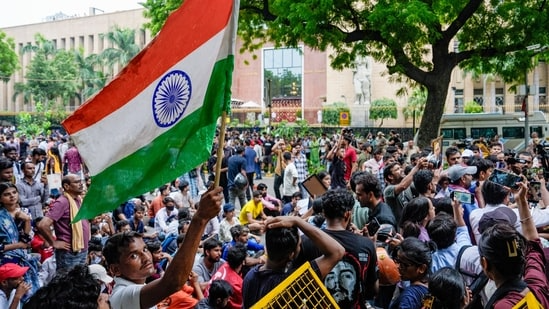 A still from the Jantar Mantar protest
Solicitor General Tushar Mehta informed the top court that the government would comply with its directions and withdraw FIRs wherever legally permissible. However, he clarified that cases registered against people with criminal antecedents would translate into legal action.
No relief for people accused of serious crimes
Responding to the apex court’s observations, Justice Joymalya Bagchi said, “Criminal law architecture permits withdrawal. That is by filing a closure report. Please first segregate those with criminal antecedents and others.”
Mehta told the court that he had discussed the issue with the petitioners’ counsel, Vrinda Grover. Grover underlined that many young people who participated in the protest had their entire future ahead of them should not face prolonged legal consequences.
Grover submitted, “The issue is whether it would be withdrawal or quashing of FIRs. It was about improvement in the education system. These are young people who have their lives ahead of them.” She added that similar issues involving FIRs in other states such as Bihar, Assam, Bengal, Uttar Pradesh and Delhi would also be examined after discussion with respective state governments. Mehta responded, “Whichever legally permissible way it may be done, the government stands by its commitment.”

The Solicitor General then said that FIRs would continue against protestors carrying grim criminal backgrounds. He told the court, “We will not take coercive action against students, but will register FIRs against those with criminal antecedents. There were 2,738 persons with criminal antecedents. They have been identified. They are accused of murder, attempt to murder, rape, etc."
SC to frame rules on use of Pellet Guns
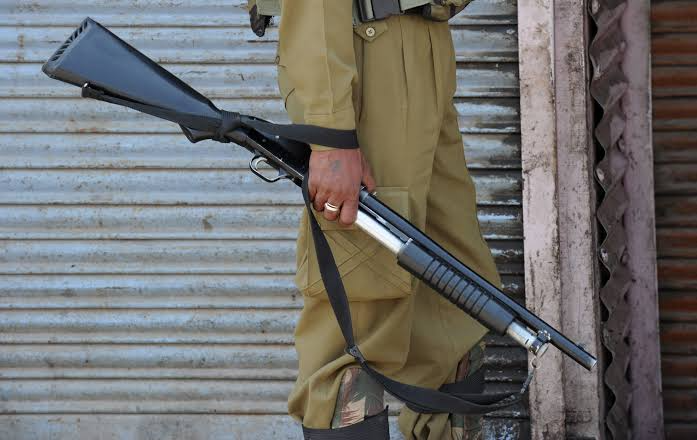
During the hearing, the top court also announced that it would frame protocol guidelines for the use of pellet guns by security personnel during protests. The court said it would specify situations in which such weapons could be utilised.
The move comes after a petition sought to impose a complete ban on the use of pellet guns against civilians. The Apex Court had earlier held that police action during protests should follow a graded response. Justice Bagchi remarked during the previous hearing,”We are in agreement with your prayer for no violence principle on persons expressing dissatisfaction or protesting. But graded responses may be required in some cases.”
The court had thereafter directed the government to submit relevant police standing orders regarding the use of pellet guns. It further directed the Delhi Police to preserve duty records, as well as weapon and ammunition logs, for examination.
 Representative image
CJP protested over NEET UG 2026 paper leak
The case pertains to a protest organised by the CJP at Delhi’s Jantar Mantar last month over alleged irregularities in the NEET UG 2026 examination process.
During the outfit’s ‘Chalo Sansad’ march, reports claimed that Rapid Action Force (RAF) personnel used pellet guns, rendering four protestors injured. The incident raised concerns over the use of force against demonstrators and led to legal intervention before the SC.