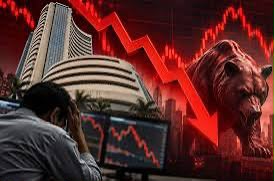
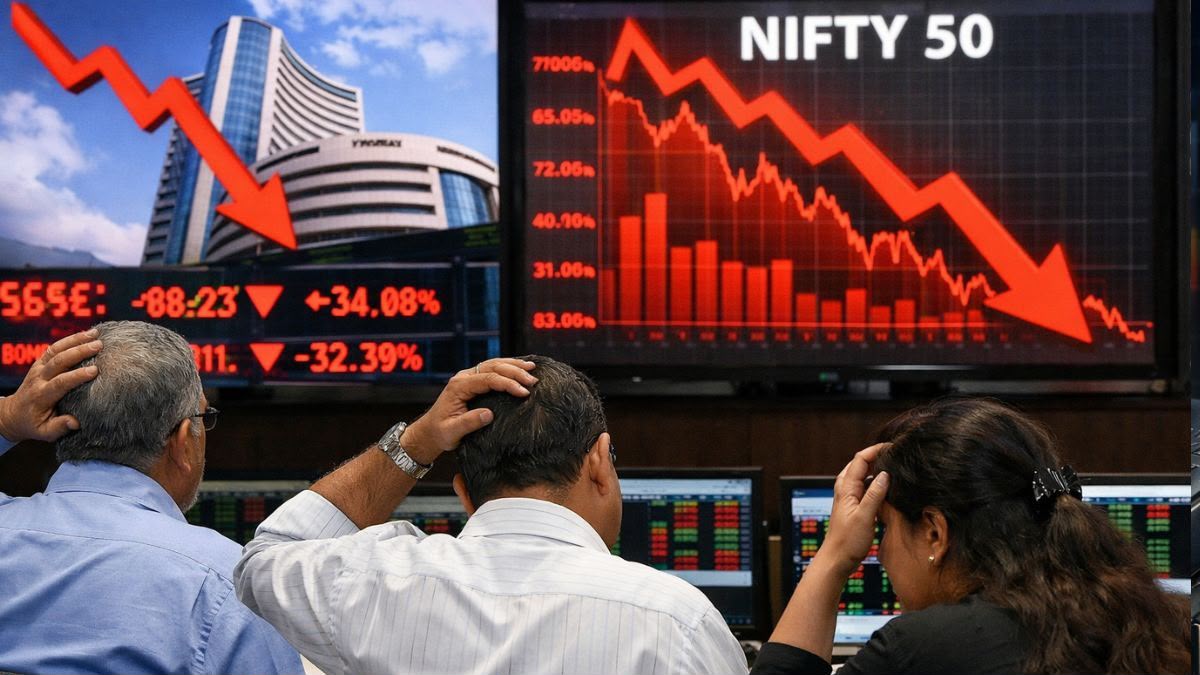
The Indian stock market witnessed a sharp sell-off on Thursday, October 8, with the benchmark Sensex plunging more than 1,000 points during the trading session. The heavy decline reflected growing concerns over rising crude oil prices, interest rates and continued selling by foreign investors.
The Sensex closed 1,045.46 points lower at 71,593.24, marking its lowest level since February 2024. The Nifty 50 also witnessed a major decline, falling 371.25 points to settle at 22,231.80, its lowest level in around 18 months.
Rising Oil Prices Add Pressure
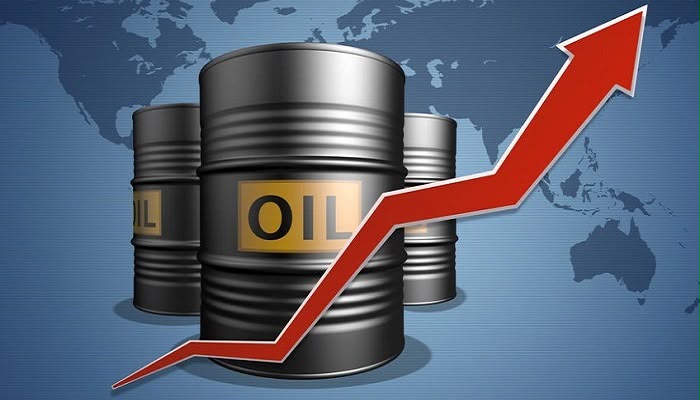
One of the major factors weighing on the Indian markets was the sharp rise in crude oil prices. Higher oil prices are a concern for India because the country relies heavily on crude oil imports.
An increase in crude prices can raise import costs, put pressure on the rupee and increase inflationary concerns. Investors therefore remained cautious as global oil markets continued to influence domestic sentiment.
RBI Rate Hike Raises Investor Concerns
The Reserve Bank of India also announced a 25-basis-point increase in the repo rate, taking it to 5.5 percent. The move added to concerns among investors about borrowing costs and economic growth.
Higher interest rates can make borrowing more expensive for businesses and consumers, potentially affecting investment and spending.
Foreign Selling Adds to Market Volatility
Continued selling by foreign investors further intensified the pressure on Indian equities. Global uncertainty and concerns over market valuations also contributed to the cautious mood.
Several major sectors ended in the red as investors rushed to reduce exposure to riskier assets.
The sharp fall has once again highlighted the sensitivity of Indian markets to global crude prices, monetary policy decisions and foreign capital flows. Investors are now expected to closely watch upcoming economic data and corporate earnings for signs of stability.