The Supreme Court (SC) on Monday ruled that women in live-in relationships that are ‘in the nature of marriage’ can seek protection under the law dealing with cruelty by husbands and in-laws. The top court’s landmark decision effectively extended the scope of Section 498A of the Indian Penal Code (IPC) to certain live-in relationships, allowing women reeling under harassment and cruelty in relationships to seek legal recourse.
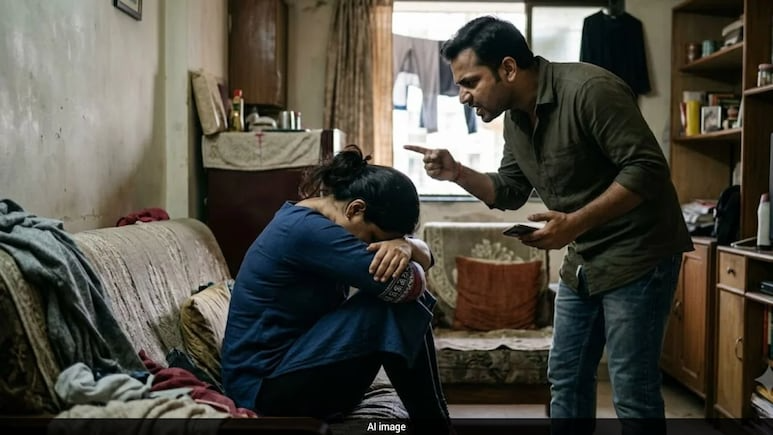 AI-generated image
However, an SC bench comprising Justices Nongmeikapam Kotiswar Singh and Sanjay Karol clarified that the protection would be applicable only in cases where the relationship assumes the characteristics of marriage and there is evidence of an intention to marry.
Difference between marriage and marriage-like relationships cannot deny protection
The Apex court noted that denying protection to a woman in a relationship that is similar to marriage, while extending it to legally married women, would be discriminatory and would result in violation of the Article 14 of the Indian Constitution, which guarantees equality before the law.
The bench said that Section 498A was intended at shielding women from harassment by husbands and his kin, including acts of cruelty that cause mental or physical harm or push a woman to the brink of suicide.
The court remarked, “When the objective of Section 498A was to provide coverage to those cases where harassment by husband or in-laws through wilful conduct causing mental or physical injury or driving the woman to suicide, then to say that such harassment can only be caused when they are married and not before that, in our considered view, would be a case of over simplification.”
 Representative image
Furthermore, it stated that the difference between a legally recognised marriage and a live-in relationship that is ‘in the nature of marriage’ has no responsible connection with the objective of preventing domestic violence.
It added, “This distinction between married and live-in relationship in the nature of marriage, in as much as it relates to the protection envisaged by Section 498A, has no rational nexus with the object of preventing domestic violence and is as such offensive to Article 14 of the Constitution of India.”
SC upholds Karnataka HC order
The SC made the observations while upholding a verdict delivered by the Karnataka High Court (HC). The HC had earlier refused to cancel proceedings initiated against a man under Section 498A, rejecting his contention that the provision did not apply because the woman was his live-in partner and not his legally wedded wife.

The SC’s verdict came while examining the legal question of whether women in marriage-like relationships can be denied protection from cruelty solely because their relationship does not have formal legal recognition.