The Supreme Court (SC) on Thursday suggested to the Central Board of Secondary Education (CBSE) that it reconsider the implementation of its triple-language policy for Class 6 students, advising it that the mandatory requirement could be introduced from January 2027 instead of being imposed on the current batch.
Its advice came after the board maintained that it could not grant a one-time exemption to the present students of the 6th standard. It contended that doing so would create gaps in learning, disrupt the phased implementation of the revised language framework and potentially trigger similar demands from successive batches.
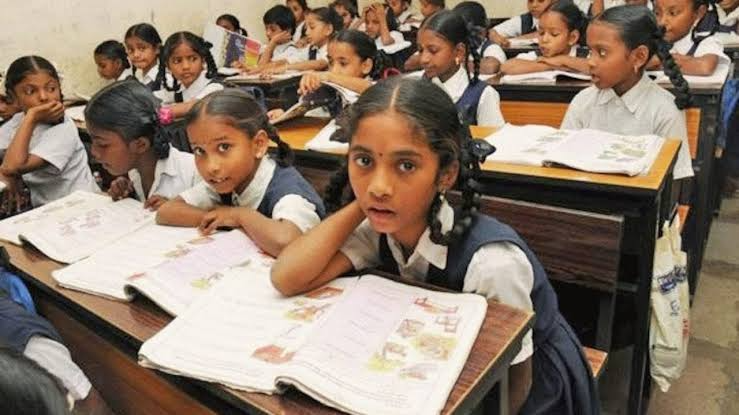 Representative image
An SC bench comprising Chief Justice of India (CJI) Surya Kant and Justices Joymalya Bagchi as well as V Mohana said the delay would pave the way for students, parents and schools to achieve more time to adjust to a policy envisaged under the National Education Policy (NEP) 2020 but implemented only in 2026.
SC calls for elbow space for students
Justice Bagchi suggested that the mandatory exercise could begin with Class 6 students from 2027, while the ones currently in Class 6 could be allowed to take up the third language voluntarily.
The court’s suggestion surfaced after its earlier intervention on September 10 this year, when it asked the board to explore a one-time accommodation for the current Class 6 batch. The latest hearing was held after the board submitted in-depth reasons for opposing such relief.
 CBSE
CBSE
Appearing on behalf of the petitioners, senior advocate Anand Grover informed the bench that the CBSE had decided against extending to Class 6 the transitional relief already provided to students in other classes.
However, appearing on behalf of the CBSE, Additional Solicitor General Aishwarya Bhati agreed to take the court’s suggestion back to the board. The matter will next be heard on September 23.
CBSE cites gaps in learning
In its note, the CBSE said Class 6 was being viewed as a starting point for the revised framework under the NEP 2020 and National Curriculum Framework for School Education (NCF-SE) 2023. It argued that exempting the present batch would mean students being promoted to Classes 7 and 8 would lack the language-learning exposure and continuity envisaged under the framework.
Furthermore, it warned that granting an exemption at this juncture could create a precedent, and he upcoming batches could seek similar concessions and potentially delay implementation indefinitely.
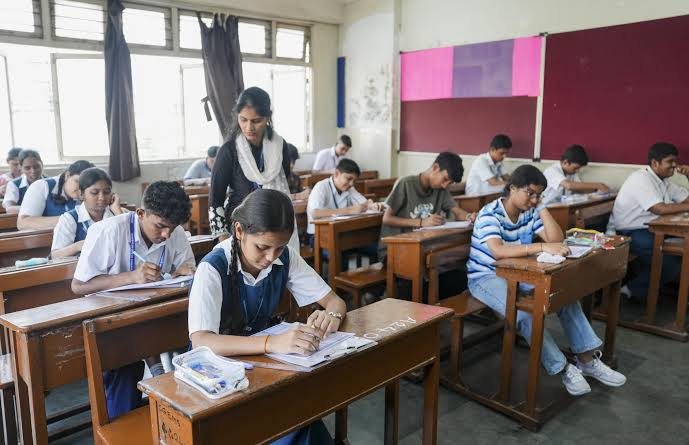 Representative image
It also cited implementation statistics to back its claims. As per the board, only 1.05% of around 28,195 schools affiliated to it had Class 6 students opting for more than one non-indigenous language.
It further said that textbooks for the third language were available on the NCERT website in all 22 scheduled Indian languages, covering the choices of 98.36% of schools. For the remaining languages, SCERT textbooks and other resources would suffice.
Committee constituted to monitor rollout
Additionally, the board informed the court that a five-member committee had been constituted on September 16 to facilitate and keep a tab on the implementation of the triple-language framework in Classes 6 to 10.
The panel shall assess language options offered by schools, availability of qualified teachers, textbooks and digital resources, besides recommending measures to address hurdles in implementation.
The CBSE also maintained that the triple-language formula by itself is not new. It said the framework had been adopted under the National Policy on Education, 1968, reiterated in the 1986 policy and reflected in subsequent National Curriculum Frameworks.
As per the revised framework, however, at least two of the three languages must be indigenous Indian languages.