The Lok Sabha passed the Public Examinations (Prevention of Unfair Means) Amendment Bill, 2026 in the verbal mode on Wednesday, paving the way for a tougher action against exam paper leaks in the aftermath of the NEET UG 2026 controversy which led to the resignation of former Union Education Minister Dharmendra Pradhan last week.
Notably, the legislation seeks to amend the Public Examinations (Prevention of Unfair Means) Act, 2024, and will now be taken up by the Rajya Sabha. If the Upper House greenlights it, it will be sent to President Droupadi Murmu for assent before turning into a law.
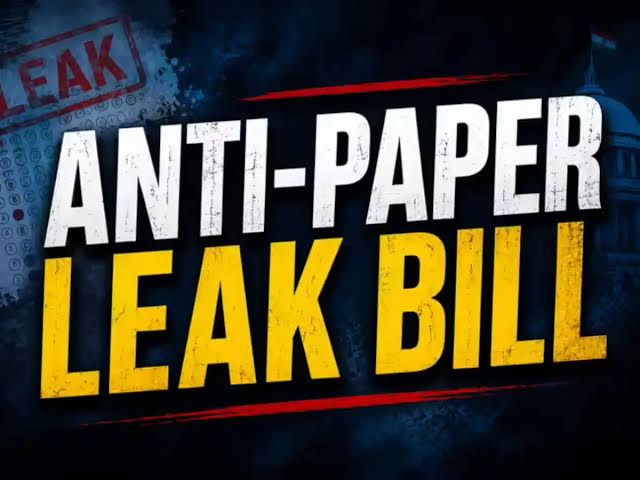
Introducing the Bill, Union Minister of State Jitendra Singh said the proposed amendments reflected the government’s willingness to ‘learn from experience’ and strengthen the legal framework against organised examination fraud.
Stormy debate ensues in LS before Bill’s passage
The Bill was passed after a heated debate in the Lower House which saw repeated disruptions. Parliamentary Affairs Minister Kiren Rijiju took exception to remarks made by Leader of Opposition Rahul Gandhi concerning Union Home Minister Amit Shah over police action during the Cockroach Janta Party (CJP)-led agitation in Delhi on July 20, 2026.
Lok Sabha Speaker Om Birla urged Gandhi to confine his remarks to the legislation under discussion, but repeated exchanges between the Treasury and Opposition benches triggered numerous adjournments.
 Minister Kiren Rijiju
Stringent punishments for exam offenders
Under the amended legislation, penalties have been enhanced for people found guilty of using unfair means in public examinations. The revised provisions include a minimum prison sentence from three years to five years, while the maximum punishment will double from five years to 10 years.
The maximum fine has been surged fivefold; from Rs 10 lakh to Rs 50 lakh. Service providers responsible for conducting examinations will face even dire consequences. If found guilty, they can now be fined up to Rs 5 crore, compared with the previous limit of Rs 1 crore, and shall be barred from participating in exam-related work for eight years, up from four years.
In cases of organised and coordinated attempts to compromise public examinations, the minimum jail term has been raised to seven years from five years, while financial penalties may extend up to Rs 10 crore.
Mandatory timelines introduced for probe, trials
The amendment also introduces two new provisions; Sections 12A and 12B, to ensure faster investigations and time-bound trials in cases pertaining to exam malpractices. It outlines that investigations must now be completed within two months of a case being referred by the Central Government, whether handled by a central agency or a newly created Special Task Force (STF). Additionally, every state and Union Territory will now be required to establish designated fast-track courts, in consultation with the respective High Courts (HCs), to hear such cases on a day-to-day basis.
 Representative image
It has been mandated under the legislation that trials be completed within three months of the filing of the chargesheet, while appeals before the HCs are expected to be decided by benches of at least two judges within three months of admission, as far as possible.