With the possibility of below-normal rainfall this monsoon, Madhya Pradesh Chief Minister (CM) Dr Mohan Yadav on Thursday reviewed the state's preparedness and directed all concerned departments to work in close coordination to minimise the impact on agriculture and water resources.
Chairing a high-level meeting at the State Secretariat, the Chief Minister assessed contingency plans prepared by the departments of Farmers' Welfare and Agriculture Development, Water Resources, Horticulture, Animal Husbandry, Fisheries, Cooperation, Public Health Engineering and other allied agencies. He emphasised that the possibility of scanty rainfall should be viewed not as a crisis but as an opportunity for better planning, scientific farming and timely intervention.
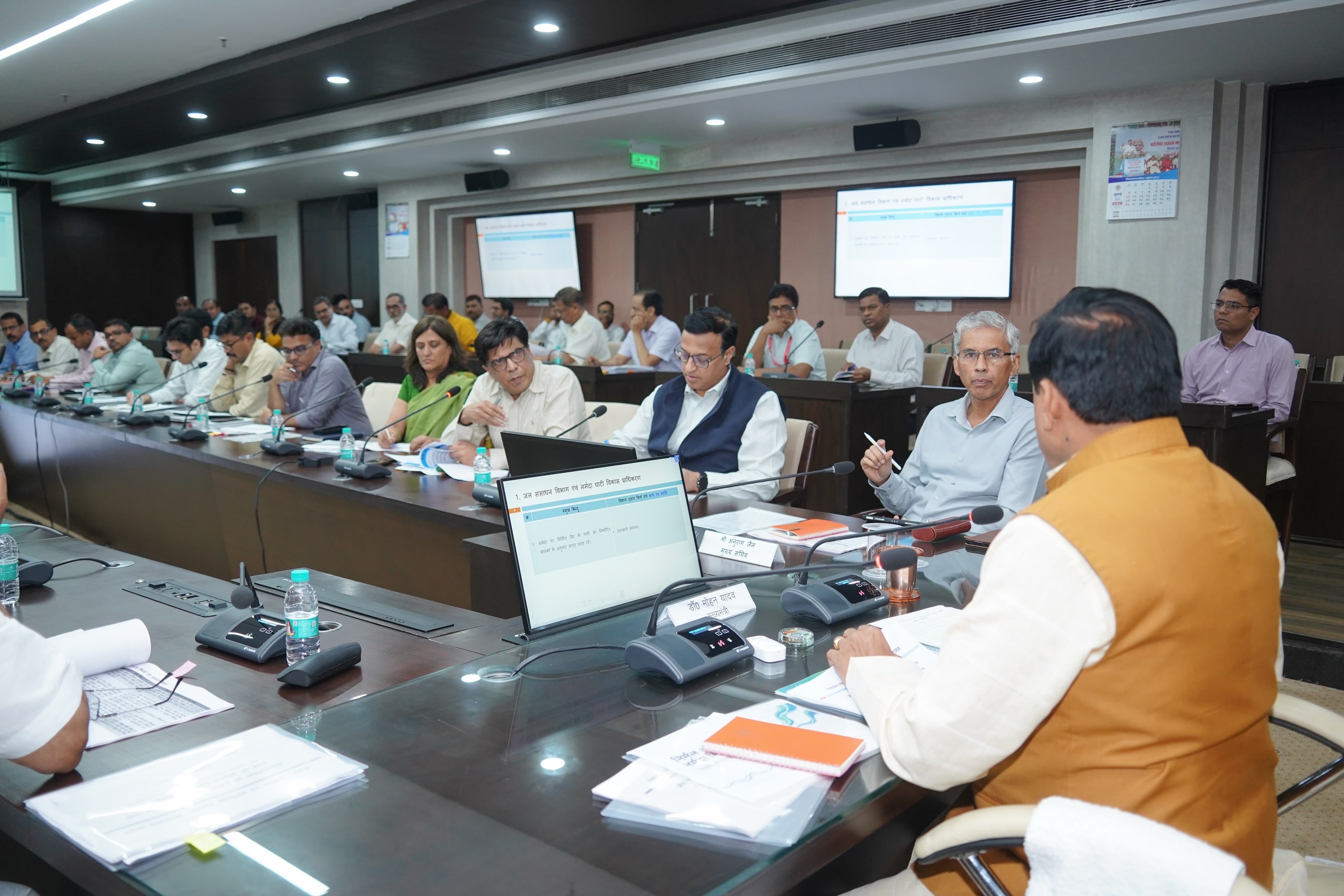 A still from the meeting
Farmers urged to shift to low-water crops
CM Dr Yadav said the state government's priority is to ensure that every farmer is equipped to tackle weather-related challenges through scientific agricultural practices and informed decision-making. He directed officials to launch extensive awareness campaigns encouraging farmers to cultivate crops that require less water and have shorter growing periods.
The Chief Minister particularly recommended the cultivation of sorghum, pearl millet, black gram, green gram, pigeon pea and nutritious millets such as kodo and kutki, saying these crops can deliver better yields with lower water consumption while improving farmers' incomes.
He also advised farmers against rushing into sowing operations, stressing that cultivation should begin only after adequate soil moisture is available. Officials were instructed to promote moisture conservation techniques, high-yielding crop varieties and modern farming technologies. Agricultural scientists and extension workers have also been asked to ensure that technical guidance reaches farmers promptly so they can choose crops best suited to local conditions.
Water security plans for urban and rural areas
The meeting reviewed an extensive action plan to strengthen water management over the next two years. The government will identify alternative water sources for all urban local bodies and prepare emergency tanker supply plans while ensuring the timely completion of drinking water projects under the AMRUT 2.0 programme.
In rural areas, village-wise reviews under the Jal Jeevan Mission will be undertaken, alongside a 90-day campaign to repair incomplete or defunct piped water supply schemes.
Under the 'Jalabhishek 2.0' initiative, the state will survey and restore traditional water bodies, including ponds, stepwells and wells. At least 100 water conservation structures in every development block will be revived over the next two years through convergence with the Mahatma Gandhi National Rural Employment Guarantee Scheme (MGNREGS).
 MP CM Dr Mohan Yadav
State-level water dashboard to strengthen monitoring
The government also announced plans to establish a state-level water dashboard to enable real-time monitoring and early warning of water-related challenges. District collectors will prepare local water crisis contingency plans, while reservoir operations will follow strict protocols prioritising drinking water, followed by irrigation and hydropower generation.
Officials informed the meeting that district-specific contingency crop plans have already been prepared, along with measures to promote pulses, oilseeds and millets. Farmers will continue receiving weather forecasts, crop advisories and timely agricultural guidance through social media and extension networks.
The Chief Minister reiterated that the state government is continuously monitoring the rainfall situation and remains committed to safeguarding farmers' interests through coordinated planning, technical support and timely administrative intervention.