The aftermath of a devastating flash flood along Nepal’s Trishuli River in Nuwakot district has left behind damaged infrastructure, uprooted trees and huge amounts of debris. The disaster has severely affected communities along the river corridor, with recovery and reconstruction efforts continuing.
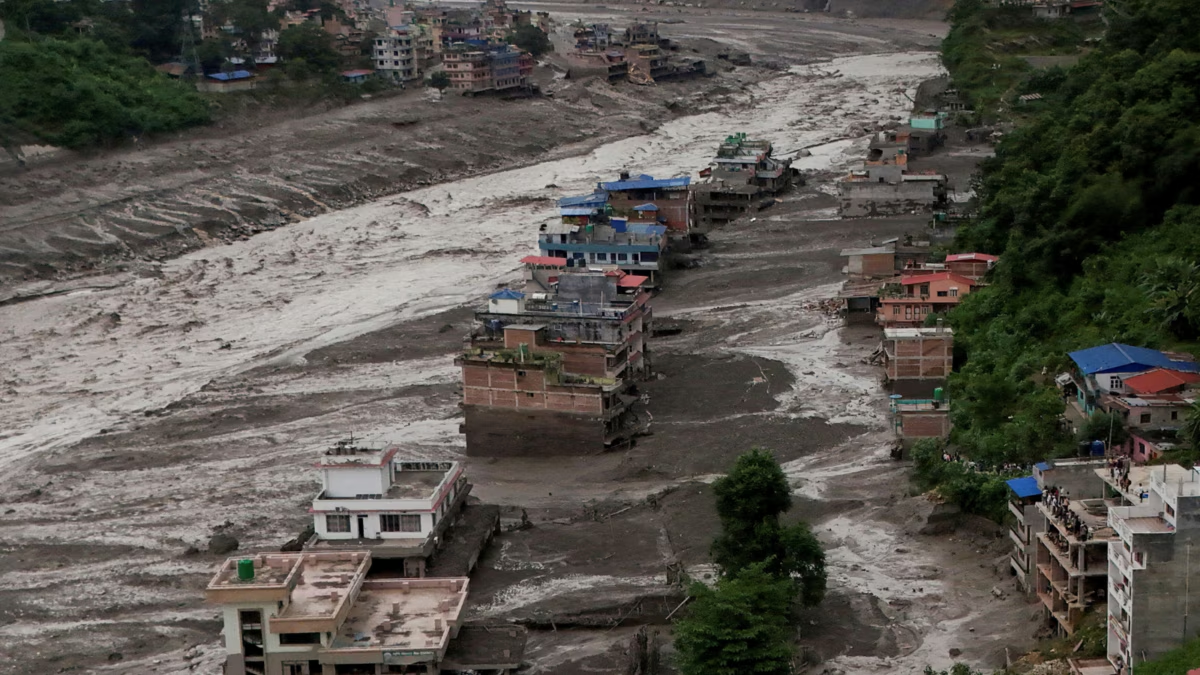
Riverbank Shows Scale of Destruction
Images from Nuwakot show the extent of the damage, with trees uprooted and sections of infrastructure destroyed along the Trishuli River. Several riverside settlements were badly affected as floodwaters swept through homes, roads and other structures.
Roads And Bridges Damaged
The flooding damaged important roads and bridges, disrupting connections between communities. Authorities have started repair work on several footbridges along the Trishuli corridor to restore access to markets, schools and other essential services.
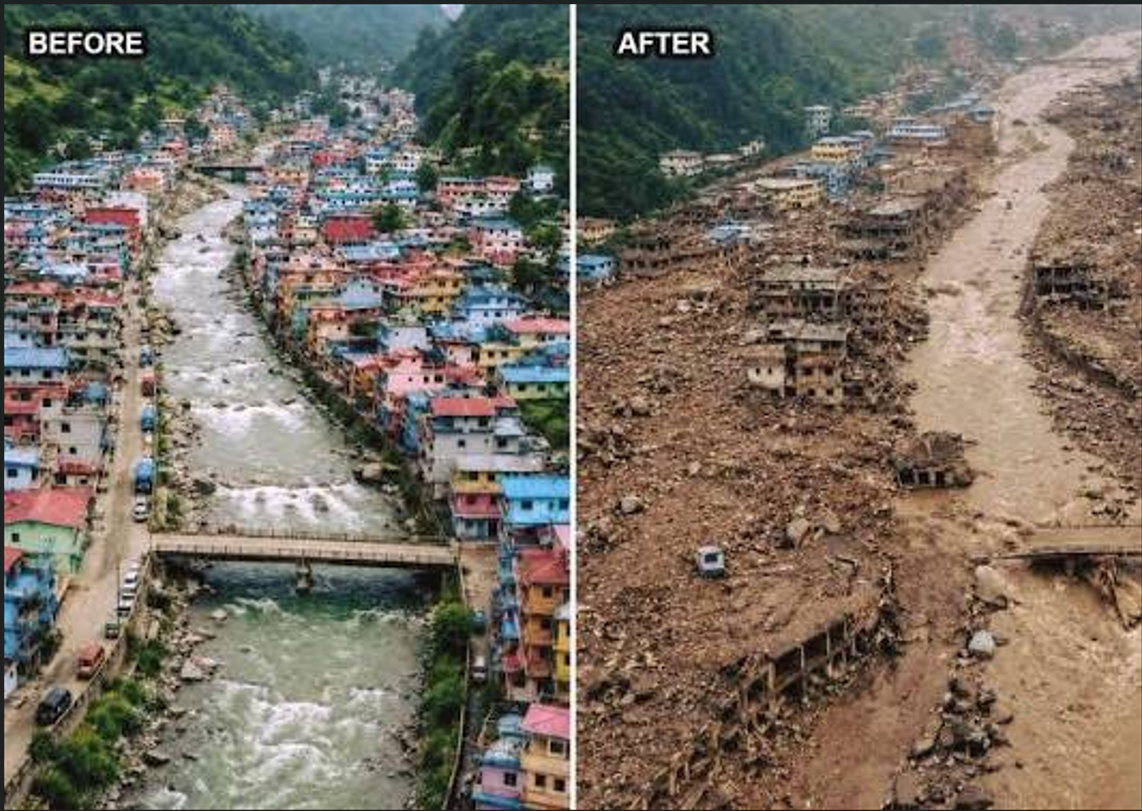
Flood Survivors Still Struggling
Weeks after the disaster, many displaced families are still living in temporary shelters.
Continued rainfall has made conditions more difficult, with water entering some tents and hampering efforts to clear debris and recover belongings. More than 2,100 households in Nuwakot were directly affected, according to local authorities.
A Massive Flood Disaster
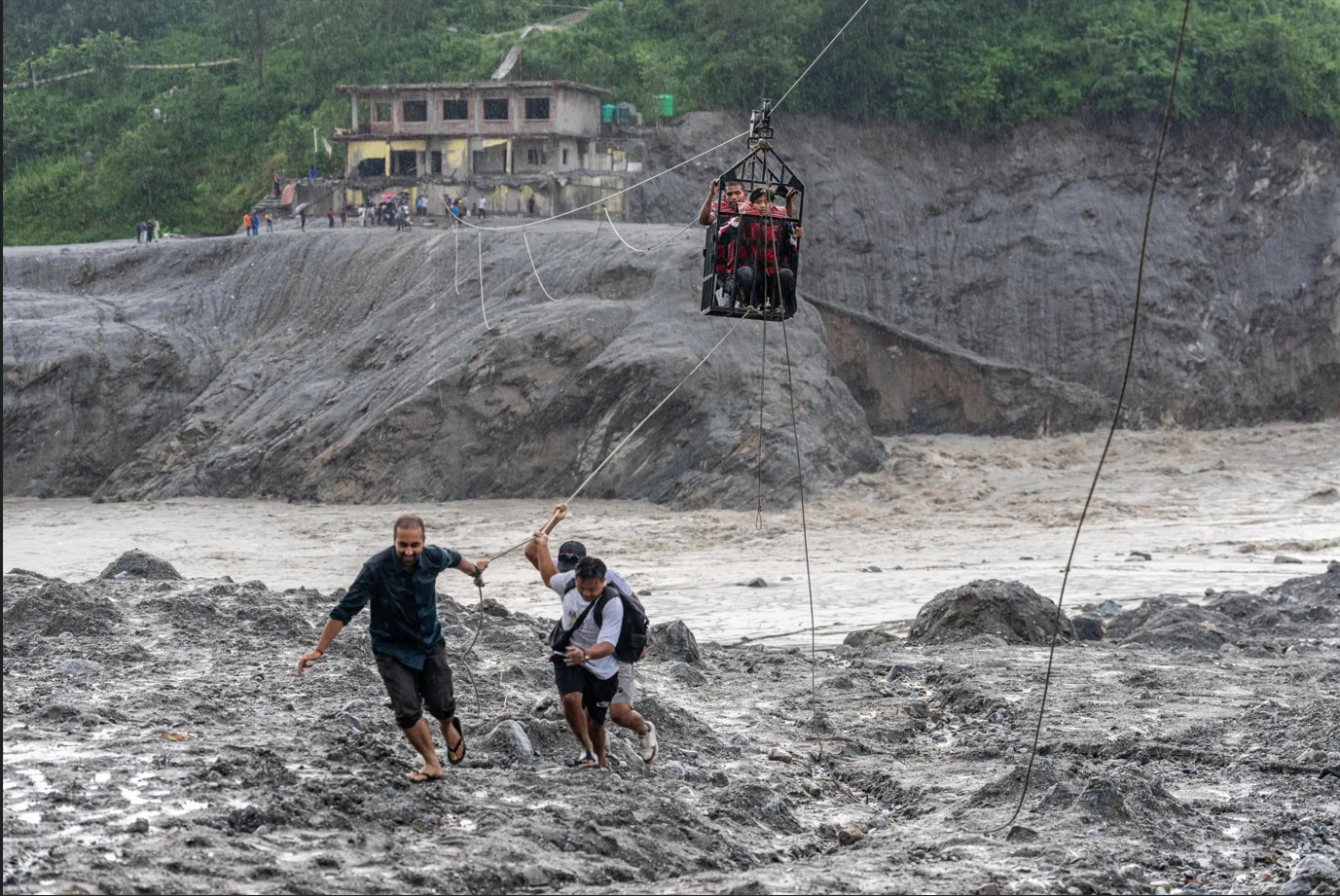
The flash flood struck on August 26, after a major ice-and-rock collapse near the Nepal-China border triggered a surge through the Bhote Koshi and Trishuli river systems. The resulting flood caused widespread destruction across several districts, damaging homes, bridges, roads and hydropower infrastructure.
Recovery Efforts Continue
Rescue, debris-clearing and reconstruction work is continuing in affected areas. For communities along the Trishuli, the landscape now reflects the enormous force of the disaster with damaged infrastructure and uprooted trees marking the path of the flood.