
 Shubh Laabh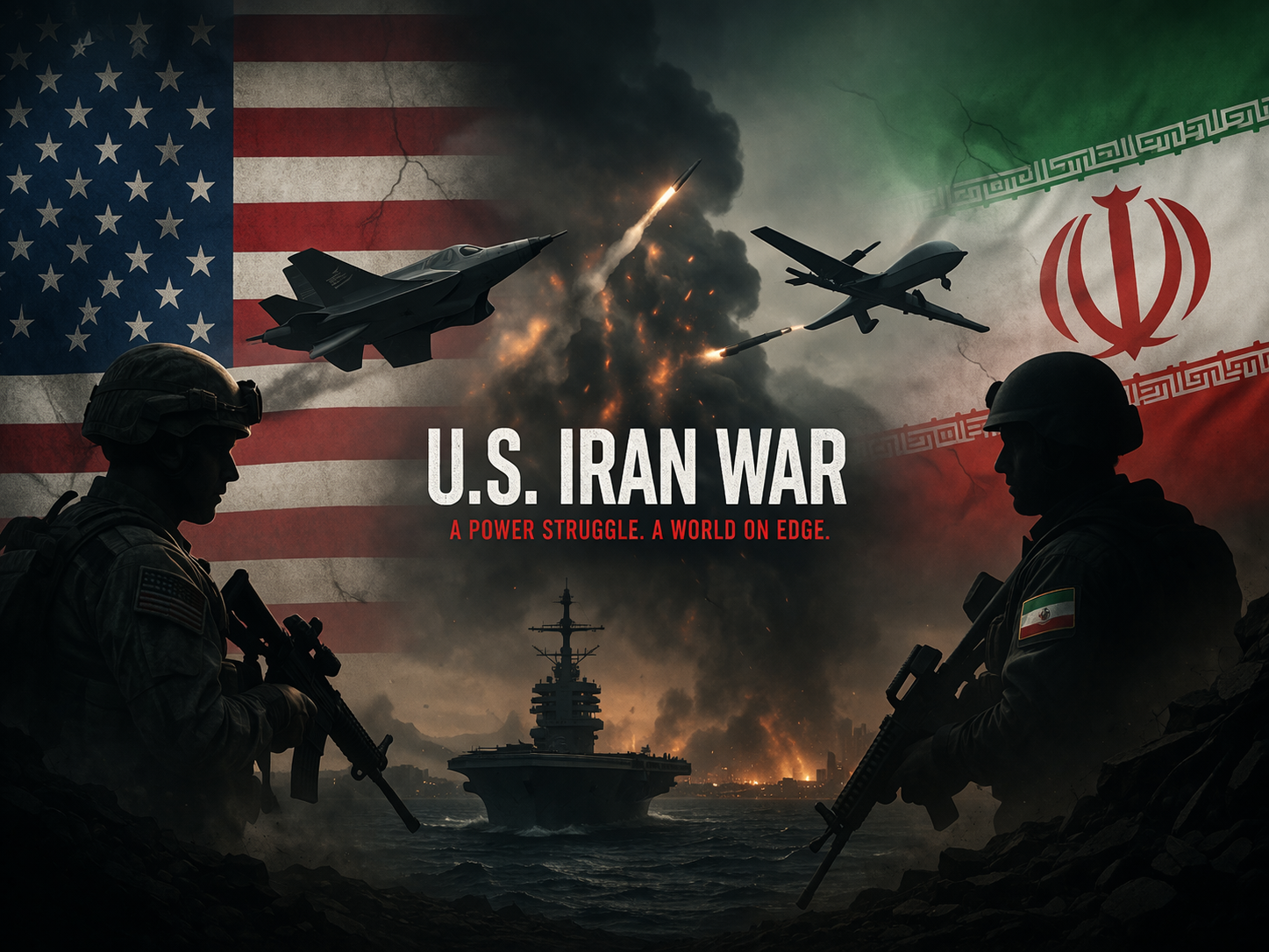
US–Iran War Reaches Critical Stage
US Iran war 2026: The U.S.–led war against Iran, launched on February 28, 2026, has entered its fifth week and shows no sign of ending soon despite repeated promises from President Donald Trump that hostilities could conclude within two to three weeks. Iranian‑backed forces and Hezbollah continue to fire rockets and missiles into Israel and the Gulf, while the United States and Israel maintain a relentless air and missile campaign inside Iran, targeting military infrastructure, missile sites, air defenses, and command centers.
Both sides now speak of a “final phase” of the war, but this has not translated into a de‑escalation on the ground or in the skies over the Middle East.
How the War Started
Mid‑morning on February 28, U.S. and Israeli forces launched Operation Epic Fury, a coordinated strike campaign involving nearly 900 precision strikes within the first 12 hours. These attacks focused on Iranian missile systems, air defenses, military bases, and leadership facilities, with U.S. officials later stating that the timing was partly chosen to catch Iran’s supreme religious leadership off‑balance before it could fully disperse.
Iran responded by launching salvos of ballistic missiles, drones, and cruise missiles at U.S. and allied bases, oil facilities, and shipping lanes in the Strait of Hormuz. Tehran also widened its response beyond military targets, striking at vessels and infrastructure across the Gulf and threatening to fully close the Strait of Hormuz if pressure continued.
US Iran war 2026: Latest Military Developments
As of early April 2026, Iran has fired multiple missile salvos at Israel in a single day, with Israeli air defenses intercepting waves of inbound projectiles. The Gulf states especially the UAE, Saudi Arabia, and Jordan have also reported picking off Iranian‑launched drones and missiles before they reach critical infrastructure.
On the other side, U.S. and Israeli forces continue air and missile strikes on Iranian‑backed militias in Iraq and Syria, as well as inside Iran itself, in an effort to degrade Iran’s ability to sustain long‑range attacks. President Trump has claimed that more than 13,000 targets have been hit since the war began, including a large portion of Iran’s missile and air‑defense infrastructure.
Strait of Hormuz and Global Oil Markets
The most consequential flashpoint of the conflict is the Strait of Hormuz, through which roughly one‑fifth of the world’s seaborne oil passes. Iran has effectively blocked or severely restricted commercial traffic through the strait, allowing only vessels that are not linked to the U.S. or Israel to pass under strict conditions.
This partial closure has sent global oil prices sharply higher. Benchmark crude benchmarks have climbed into the 105–110 dollar‑per‑barrel range, with analysts warning that prolonged disruption could trigger a wider economic shock. Stock markets have reacted nervously, with energy shares rallying and financial indices falling as investors price in the risk of a prolonged regional war.
Trump’s Stance and Iran’s Response
President Trump has repeatedly stated that the war could end soon, even without a formal negotiated deal, but he has also threatened to “completely destroy” Iran’s power grid, oil production facilities, and desalination plants if the Strait of Hormuz remains closed or if Iran continues its attacks. At the same time, he has downplayed domestic concerns about fuel prices, arguing that the U.S. has sufficient energy reserves to withstand the crisis.
Iran’s leadership, however, shows little sign of backing down. Foreign Minister Abbas Araghchi has publicly dismissed U.S. peace overtures, saying Tehran has “zero confidence” in Washington’s commitments and that there are currently no active negotiations. Iranian officials insist that the war will continue as long as the U.S. and Israel maintain their military pressure, and they frame their actions as a defense of national sovereignty and regional dignity.
Regional Spillover and Human Cost
The conflict is no longer confined to the direct U.S.–Iran axis. Israel has intensified attacks on Hezbollah targets in southern Lebanon, while Hezbollah and Iran‑backed groups fire rockets and missiles into northern Israel. Lebanese authorities report hundreds of casualties and widespread displacement in border areas, with humanitarian agencies warning of a deepening crisis.
Across the Gulf, countries such as Saudi Arabia, the UAE, and Jordan have been forced to raise their military alert levels and invest heavily in missile‑defense systems. NATO members have also stepped up air‑defense patrols and surveillance missions, fearing the war could draw in other regional or global actors.
US Iran war 2026: What Comes Next?
Analysts are divided on whether the war is entering a de‑escalation phase or simply a different kind of stalemate. Some experts believe that Iran will not fully reopen the Strait of Hormuz or agree to major concessions until it sees a clear political or military shift away from its current leadership structure. Others argue that the economic and diplomatic costs will ultimately force all sides to negotiate, but that such talks could take weeks or even months.
For the rest of the world, the key question remains: How long can global markets and regional allies withstand the current level of conflict without a negotiated settlement? As long as the Strait of Hormuz remains under pressure and missile fire continues across the region, the risk of a wider regional war will stay high.
Why This Matters for India
Oil prices and inflation: Higher crude prices will likely feed into gasoline and transport costs in India and elsewhere, affecting household budgets and corporate profitability.
Security and travel:
Escalation in the Gulf could impact regional air routes, shipping insurance, and the safety of Indian workers and expatriates in West Asia.
Geopolitics: The war is reshaping alliances in the Middle East and testing the reliability of existing security partnerships, with long‑term implications for global trade and energy flows.

 Rohan Umak