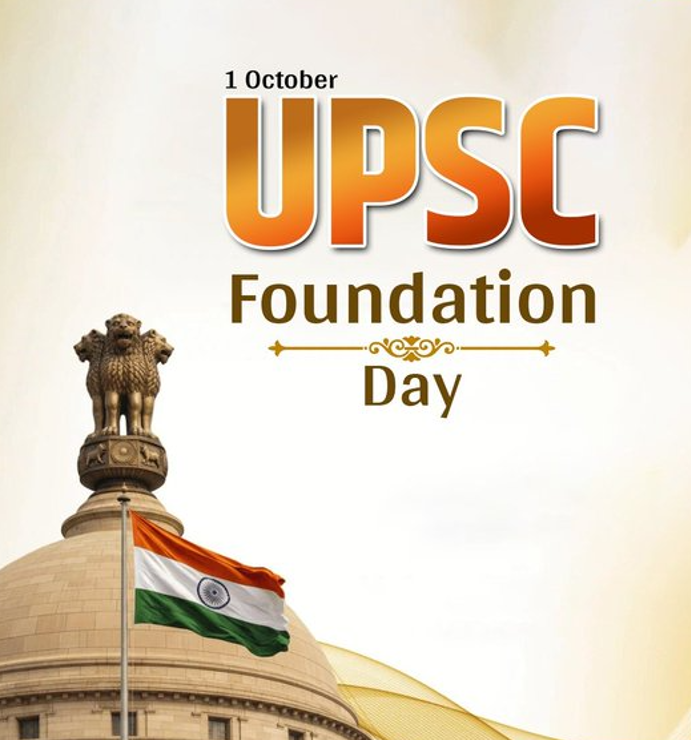
The Union Public Service Commission (UPSC) marked 100 years of its journey on October 1 with a centenary celebration at Bharat Mandapam in New Delhi. Prime Minister Narendra Modi attended the event and highlighted the commission’s role in selecting candidates for India’s public services.
PM Modi Emphasises ‘Nation First, Citizen First’
Addressing the gathering, PM Modi said recruitment should keep two principles in mind “Nation First” and “Citizen First.” He said civil service recruitment should focus not only on what candidates know, but also on their motivation to serve the public.
He said young people entering public services should be driven by public service rather than public office.
Commemorative Coin, Stamp and Book Released
During the centenary celebrations, a commemorative postage stamp, a special coin and a compilation of 100 significant case laws connected with the UPSC were released.
The event also highlighted the UPSC’s journey since its establishment in 1926 and its role in India’s administrative system after Independence.
Focus on Future Civil Services
PM Modi said the changing needs of citizens require changes in the way civil servants are selected.
He suggested that recruitment processes should give greater importance to problem-solving, foresight and understanding of public-service motivation. He also pointed to challenges such as artificial intelligence, deepfakes, information warfare and climate-related issues.
Calls for Faster Examination Process
The Prime Minister also called for shorter and more predictable examination cycles without compromising standards. He said long recruitment processes can increase expenses for aspirants through coaching, accommodation and travel.
UPSC Begins Its Second Century
Looking ahead to 2047 and the goal of Viksit Bharat, Modi called for the UPSC and state public service commissions to continue adapting to changing needs.
He also stressed that the UPSC’s core values, including independence, impartiality, merit, confidentiality and fairness, should remain protected as the institution enters its second century.