President Droupadi Murmu on Friday greenlit the Gujarat Uniform Civil Code (UCC) Bill, 2026, paving the way for the state to become the second of its kind in independent India, after Uttarakhand, to enforce a comprehensive common framework governing personal civil matters.
The Gujarat government will now notify the rules under the legislation, following which the law would be brought into force. The Bill was passed by the state Assembly after an 8-hour debate on March 24 this year.
 President Droupadi Murmu
What’s on the cards under UCC?
The legislation establishes common provisions covering marriage, divorce, inheritance and live-in relationships. However, the Scheduled Tribe (ST) population of the state and several other groups have been exempted from the law. The state’s Chief Minister (CM), Bhupendra Patel, introduced the Bill almost a week after a committee headed by retired Supreme Court judge Justice Ranjana Prakash Desai submitted its report on the proposed code.
Earlier, Justice Desai had headed the committee which drafted Uttarakhand’s UCC.
While proposing the legislation, Patel said the measure was aimed at safeguarding women’s rights and promoting social harmony, as well as national unity. He argued that the UCC would not discriminate against any community or curtail the freedom of the people, while calling women’s dignity and empowerment central to the legislation.
 UCC
UCC
Congress stages walkout, Opposition objects to legislation
The Bill faced strong opposition in the state Assembly. The Congress and the Aam Aadmi Party (AAP) sought to have the legislation referred to a selective committee for further examination. Thereafter, the Congress workers staged a walkout.
The opposition legislators described the proposed law as discriminatory towards Muslims and alleged that it was being introduced for gaining political mileage. However, the Gujarat government shunned the allegations and maintained that the legislation was aimed at creating a legal framework, which would be the same for everyone.
After nearly 8 hours of discussion, the Gujarat government went on to pass the Bill by majority vote.
Marriage, divorce and live-in relationships under UCC
Under the legislation, registration of marriages has been mandated, which requires couples to register within 60 days. Failure to comply with the same can attract a penalty of up to Rs 10,000.
The law also puts an end to polygamy and bigamy, while marriages solemnised through force, coercion or fraud can attract a jail term of up to seven years. To opt for divorce, court approval and registration would be required, and out-of-court divorces shall be considered invalid. The practices shall be punishable with imprisonment of up to three years.
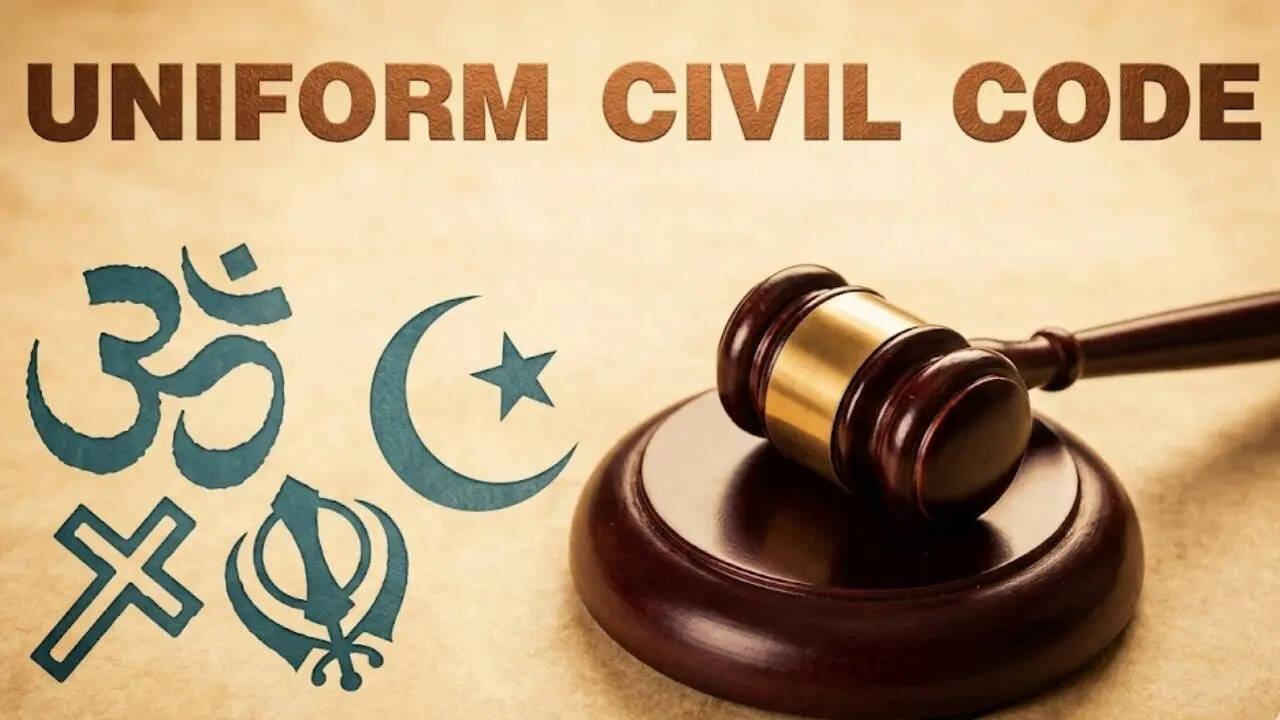
The law further bars Triple Talaq and nikah halala, besides permitting women to remarry without additional conditions. Sons and daughters have also been granted equal property rights. Live-in relationships will also fall under the legal framework, and the couples will be required to register their partnership and inform authorities when it ends.
Children born as a result of live-in relationships will be treated as legitimate and entitled to a legal claim over their father’s property. A woman deserted by her live-in partner can also seek maintenance.