Preparations for Simhastha 2028 are gathering pace in Ujjain, with major infrastructure projects underway to improve roads, traffic management and public facilities ahead of the massive religious gathering. As the city prepares to receive devotees from across India and abroad, a parallel story of public participation is emerging, with residents from different communities cooperating with development works.
Several buildings and portions of religious structures falling within road-widening zones are being removed as part of the ongoing infrastructure expansion. Among those affected is the ancestral home of Madhya Pradesh Chief Minister Dr Mohan Yadav, who personally participated in the process.
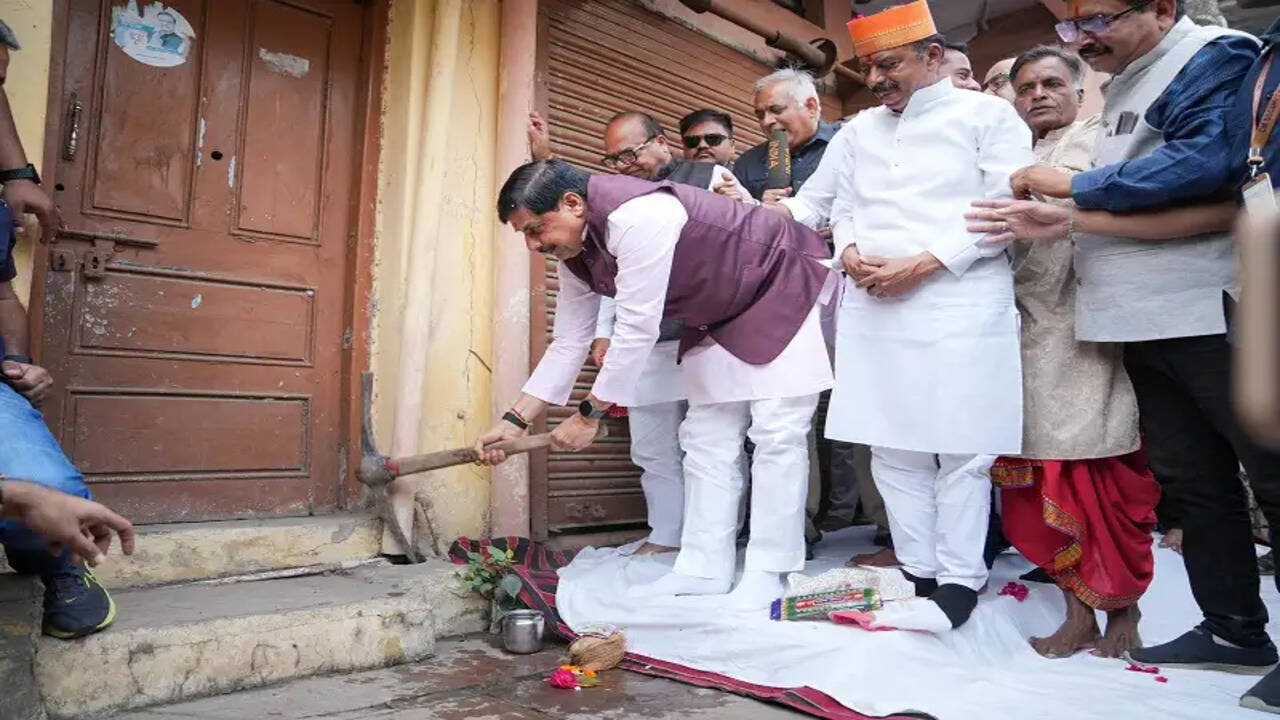 MP CM Dr Mohan Yadav commencing the demolition of his ancestral home as part of the road widening project
CM begins road-widening work at ancestral home
A stretch of more than 700 metres between Khajur Wali Masjid and Ganesh Chowk in Ujjain's Abdalpura area is planned to be widened to 15 metres. More than 270 buildings are reportedly affected by the project, including the ancestral house of CM Dr Yadav and the residence of his sister Kalawati Yadav.
On September 27, the Chief Minister visited his ancestral home and, after performing a traditional puja, used a pickaxe to initiate the removal of the affected portion of the property.
The house holds personal significance for Dr Yadav as the place where he spent his childhood. His participation has been presented as a symbolic example of the wider process, in which private properties as well as religious structures are being affected by road-widening requirements.
Religious structures also part of the infrastructure exercise
The road-widening work extends across several parts of the city and is not limited to properties belonging to any particular community. Along routes where additional space is required, portions of structures falling within the designated areas are being removed.
Several religious structures have also come within the affected zones. Along the route from Kanthal Square towards Gopal Mandir, portions of some religious sites have reportedly been removed with mutual consent.
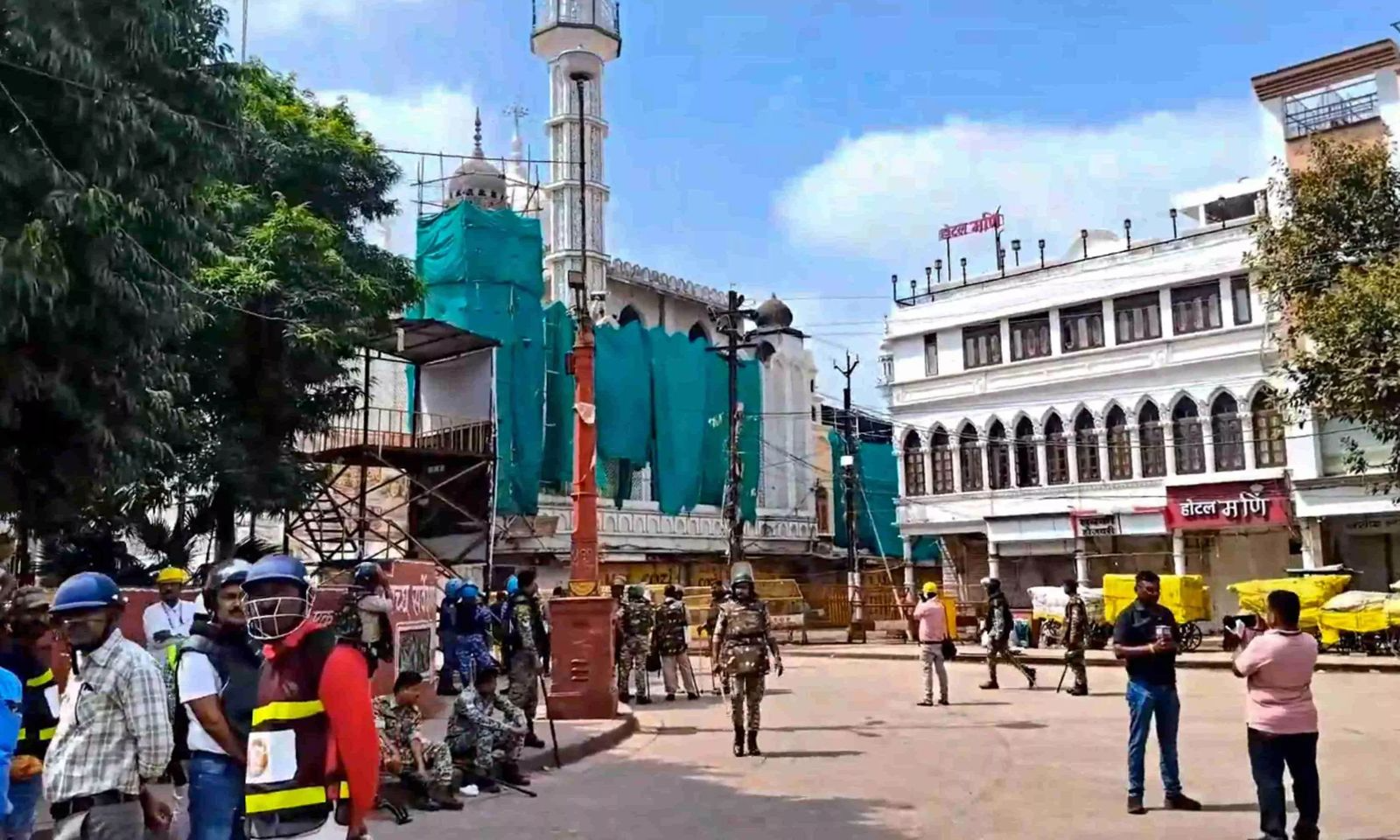 A snap of a road in Ujjain
The developments have highlighted participation from people belonging to different religious and social communities as Ujjain works towards preparations for Simhastha.
Shahi Masjid incident needs to be viewed in context
The removal of the affected portion of Shahi Masjid is also linked to the same road-widening project. According to the account provided by the local administration, an understanding had been reached with the city Qazi and representatives of the Muslim community regarding the removal of the affected portion, following which the process moved ahead.
However, on September 28, a crowd gathered at the site during the action, leading to protests and a stone-pelting situation. Police used tear gas to bring the situation under control.
The incident represents a localised episode within a much broader infrastructure exercise. While opposition was witnessed at the site, the administration has also referred to prior discussions and an understanding with community representatives. The developments therefore form only one part of the wider Simhastha preparations across Ujjain.
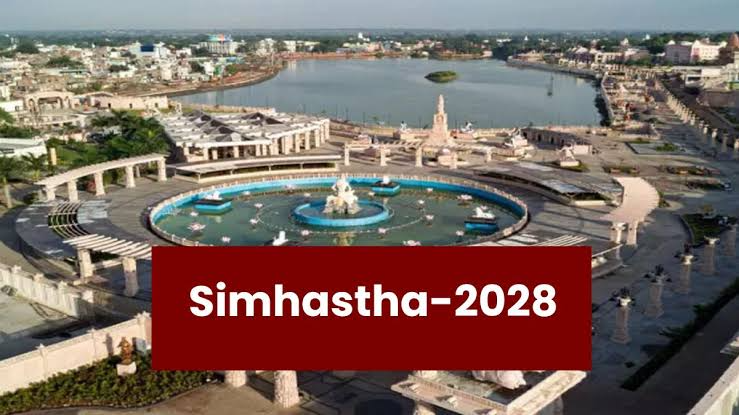
Preparing Ujjain for a massive devotee footfall
The road-widening projects are aimed at strengthening the city's infrastructure ahead of the expected movement of a huge number of devotees during Simhastha. Better roads, smoother traffic flow, safer movement and improved urban infrastructure are expected to be important requirements during the event.
Against this backdrop, the affected properties include private residences, commercial structures and portions of religious buildings. The broader challenge for the administration is to carry out the infrastructure work while addressing the concerns of affected residents through dialogue and due process.
A wider story of public participation
Simhastha is expected to have a significant impact on Ujjain's tourism, economy, culture and civic life. Its preparations therefore extend well beyond the construction of roads, bridges, ghats and public facilities.
The participation of property owners in the road-widening exercise, cooperation in removing affected portions of religious structures and the Chief Minister's decision to begin work at his own ancestral property have emerged as different examples of public participation.
As Ujjain moves towards Simhastha 2028, the city's preparations are consequently being shaped not only by government and administrative action, but also by the participation of residents and community representatives.
For a city preparing for an event of such scale, the challenge will be to balance infrastructure requirements with the concerns of affected citizens while ensuring that the development process remains transparent and consultative.