
 Shubh Laabh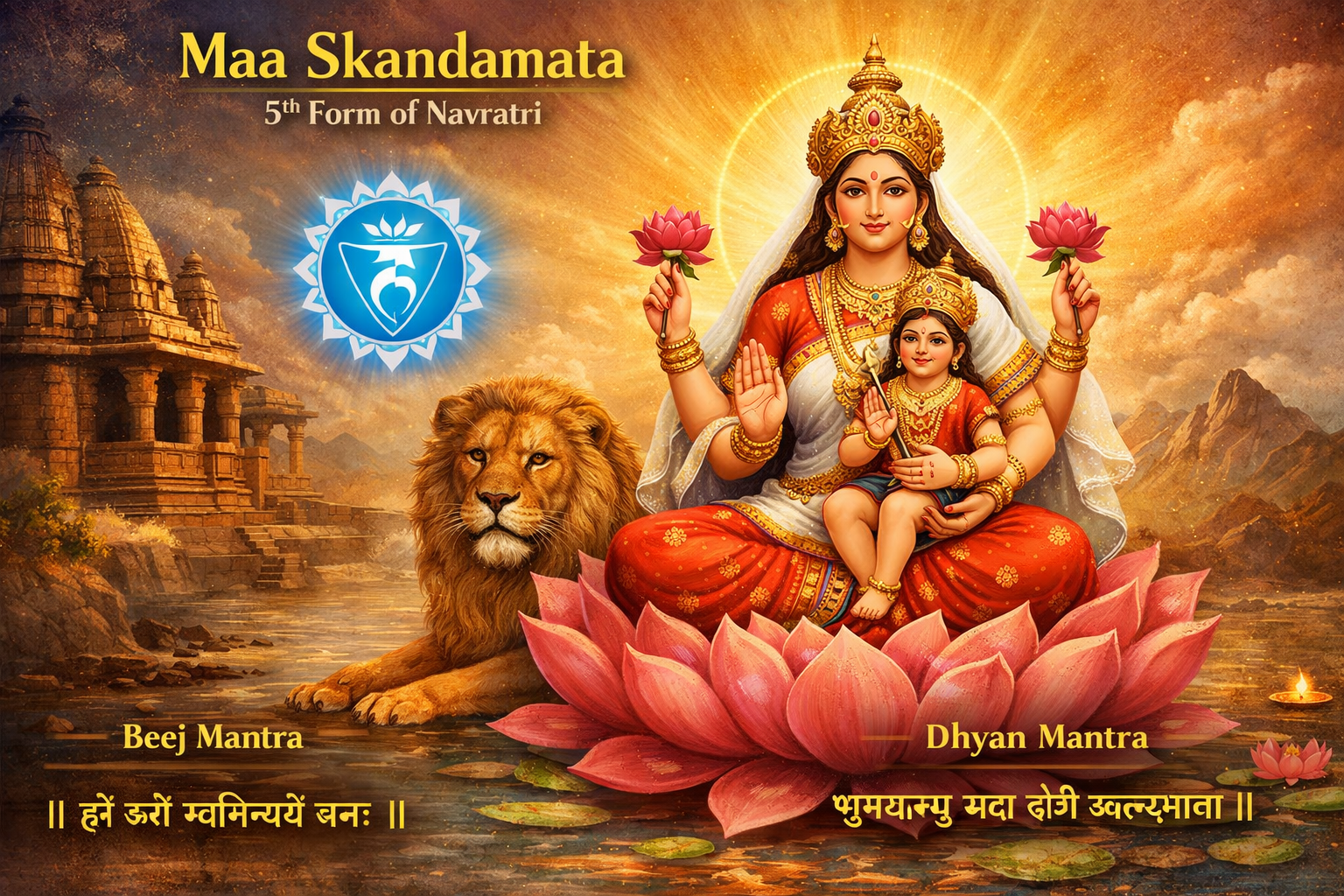
Maa Skandamata: The presiding deity of the fifth day of Navratri is Maa Skandamata. Her name is derived from two words: Skanda (a name for Lord Kartikeya) and Mother. Meaning, the one who is the mother of Kumara Kartikeya is Skandamata. This form reflects the unique balance of the Goddess’s affection and destructive power. According to mythology, a demon named Tarakasura requested a boon from Brahma that he be killed only by Shiva’s son. At that time, Shiva was an ascetic. Upon the prayers of the gods, Shiva and Parvati united, and Lord Skanda (Karthikeya) was born. When Kartikeya became the commander of the army to fight the demons, Mother Parvati prepared him for battle and protected him as a loving mother. This form came to be known as Skandamata.
Maa Skandamata: Divine Form and Symbolism of Maa Skandamata
Maa Skandamata’s form is extremely gentle and graceful. She has four arms. In the upper two, she holds a lotus flower. One hand is in Abhaya Mudra (giving fearlessness to devotees), and with the other, she holds the child Kartikeya (Skanda) seated on her lap. Although her vehicle is a lion, she often sits on a lotus flower, hence the name Padmasana. Her complexion is completely white and radiant.
Maa Skandamata: Spiritual Significance and Vishuddha Chakra Connection
In yoga practice, Maa Skandamata is associated with the “Vishuddha Chakra,” located in our throat. Awakening this chakra brings sweetness and truthfulness to a practitioner’s speech. It is the center for purifying the mind and turning from the external world to the inner consciousness.In Tantra, Skandamata is considered the “Goddess of Knowledge.” Her spiritual practice leads to the realization of the union of Shiva and Shakti within the practitioner. This goddess is considered to open the doors to salvation because she teaches the renunciation of attachment through love. Skandamata symbolizes the mother power. It is believed that the six-faced Skanda represents our six senses, and Skandamata is the mother of six knowledge systems or philosophies: Nyaya, Vaisheshika, Sankhya, Yoga, Vedanta, and Mimamsa. These are the six Angas or pillars of knowledge of the Vedas. These philosophies encompass 64 disciplines of arts and sciences, such as music, astrology, acoustics (education), and prosody. When we worship Skandamata, we bow to the mother of all knowledge. Thus, it is the path to higher education and enlightenment.
Famous Temples and Worship of Maa Skandamata
Although there are many temples of Maa Durga, some specific places of Maa Skandamata are considered to be extremely awakened: Skandamata Temple (Bageshwari Devi), Varanasi (Jaitapura): and Skandagiri, Karnataka: This form of the Maa Goddess is specially worshipped in South India along with Lord Kartikeya.
Powerful Beej Mantra and Meditation Mantra for Blessings
To get the blessings of the Mother Goddess, chanting this Beej Mantra and Stuti on this day is very fruitful: Beej Mantra: “Hreem Kleem Swaminyai Namah.”
माँ की कृपा पाने के लिए आज के दिन इस बीज मंत्र और स्तुति का जाप करना अत्यंत फलदायी है: बीज मंत्रः II “ह्रीं क्लीं स्वमिन्यै नमः” II
ध्यान मंत्र – II सिंहासनगता नित्यं पद्माश्रितकरद्वया। शुभदास्तु सदा देवी स्कन्दमाता यशस्विनी II
वह सदा सिंहासन पर विराजमान रहती हैं और उनके दोनों हाथ कमल पर टिके रहते हैं। स्कंद की माता, हे प्रतिष्ठित देवी, हम पर सदा शुभता की वर्षा करें I
The meditation mantra – She is always seated on the throne with her two hands resting on the lotus May the renowned goddess, mother of Skanda, always bestow auspiciousness upon us.


 Rohan Umak