The Karnataka Assembly witnessed a political confrontation over the rendition of Vande Mataram on Monday, September 21, after the official version played in the House stopped after two stanzas.
BJP legislators then continued singing the remaining stanzas themselves, objecting to the state government's decision to limit the song at most government programmes.
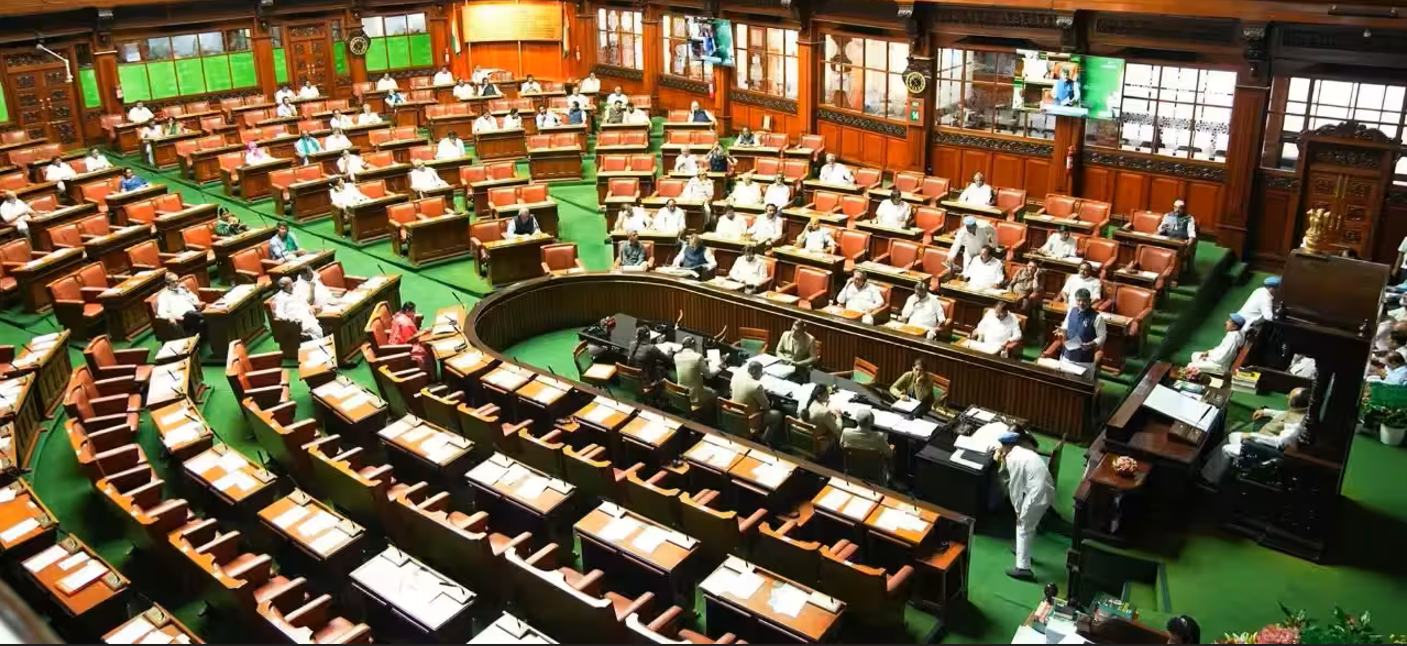
BJP MLAs Continue Singing
The Assembly session began with Vande Mataram, but the official recording ended after the first two stanzas. BJP members then raised objections and began reciting the complete version of the song.
The protest also extended to the Karnataka Legislative Council, where BJP members continued singing the remaining stanzas while the Chairman proceeded with the scheduled proceedings.
What Does Karnataka's Order Say?
The controversy follows a Karnataka government order issued earlier this month directing that only the first two stanzas of Vande Mataram be sung or played at state government programmes and official ceremonies.
The order makes an exception for events attended by the President, Vice-President, Prime Minister or Governor, where the complete version is to be rendered. The state government has said the protocol is linked to guidelines governing the rendition of the national song at official events.
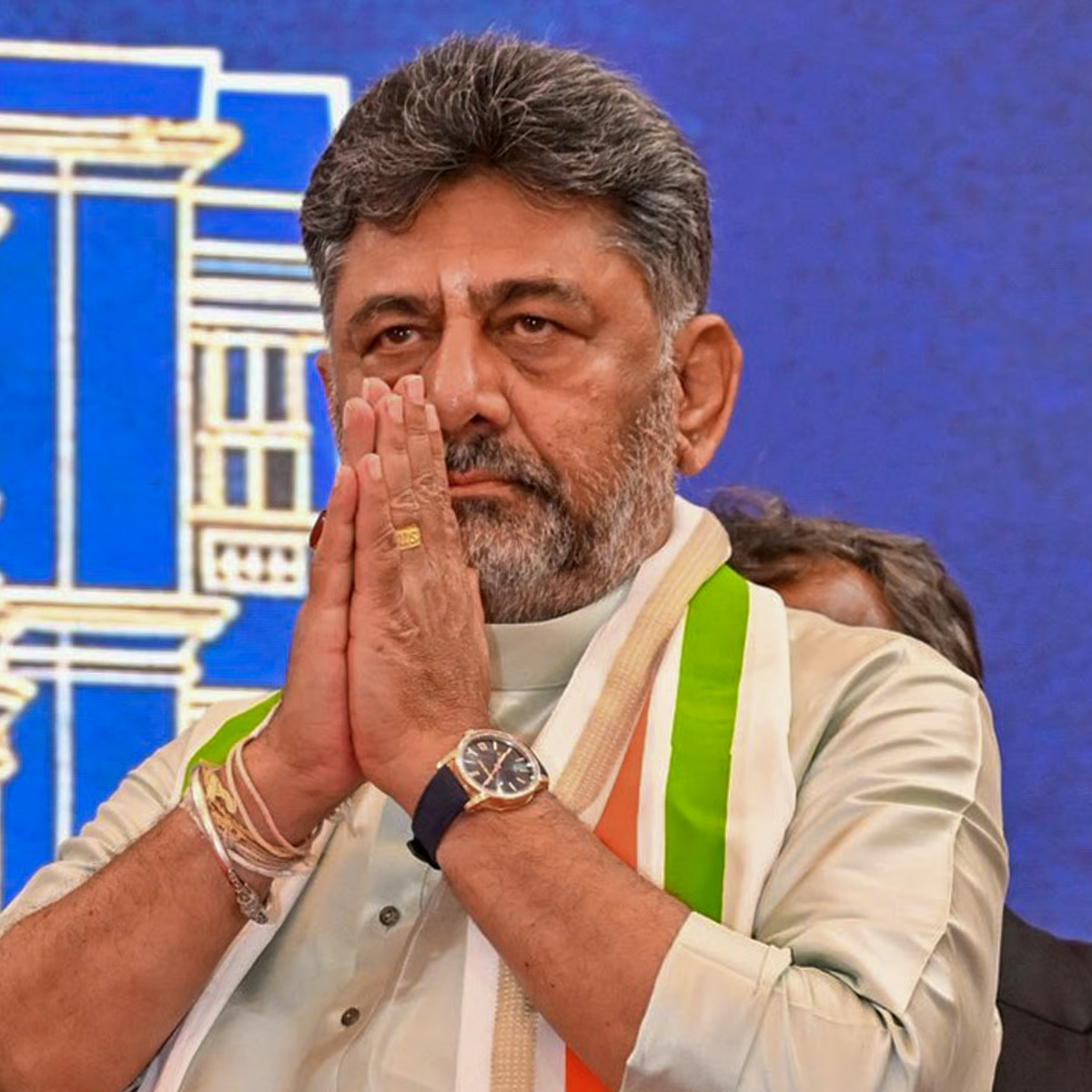
BJP Objects to the Restriction
BJP legislators have opposed the two-stanza arrangement and said they would sing the full version in the legislature if the official rendition was stopped.
The party has also raised the issue outside the Assembly, while the Karnataka government's order has been challenged before the Karnataka High Court. The petition questions the state's authority to prescribe the shorter rendition and refers to central guidelines on the national song.
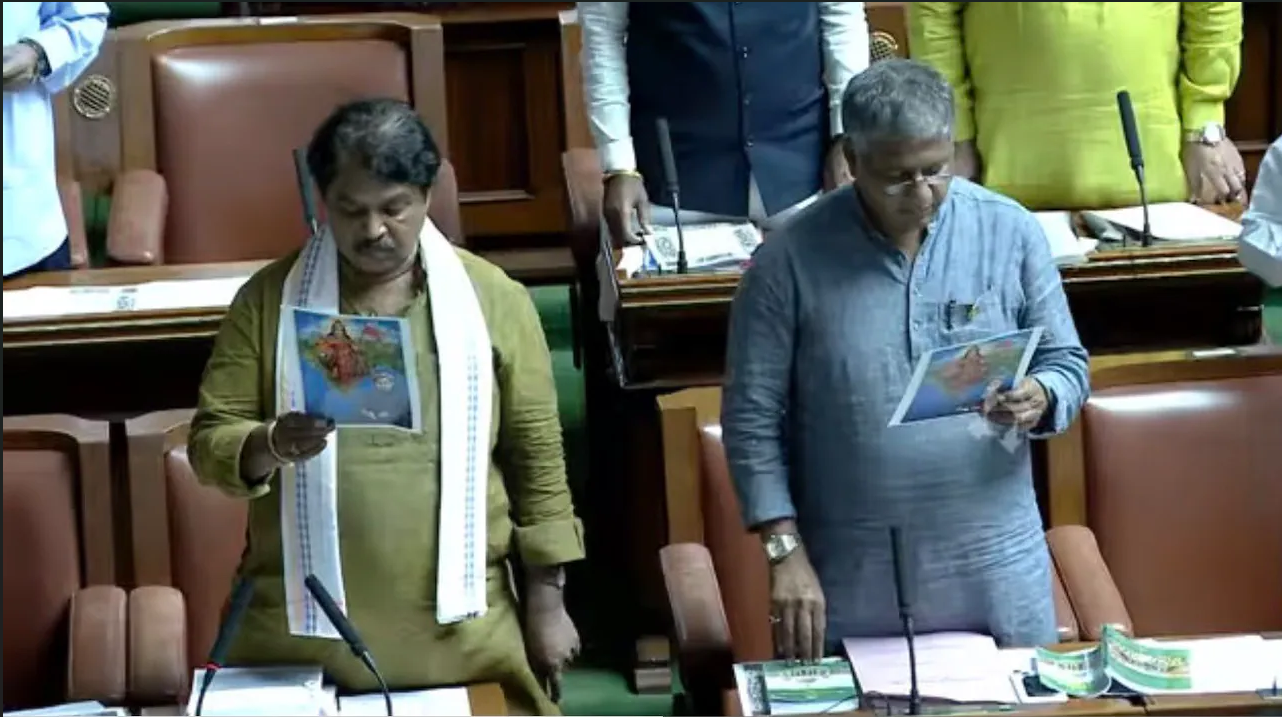
Special Session Underway
The incident took place as Karnataka's legislature began a three-day special session. The session is scheduled to discuss the state's drought situation and issues related to the Kasturirangan report on the Western Ghats.
The Vande Mataram episode has now added another political issue to the ongoing special session, with the dispute centering on how the national song should be rendered at official state functions.