
 Shubh Laabh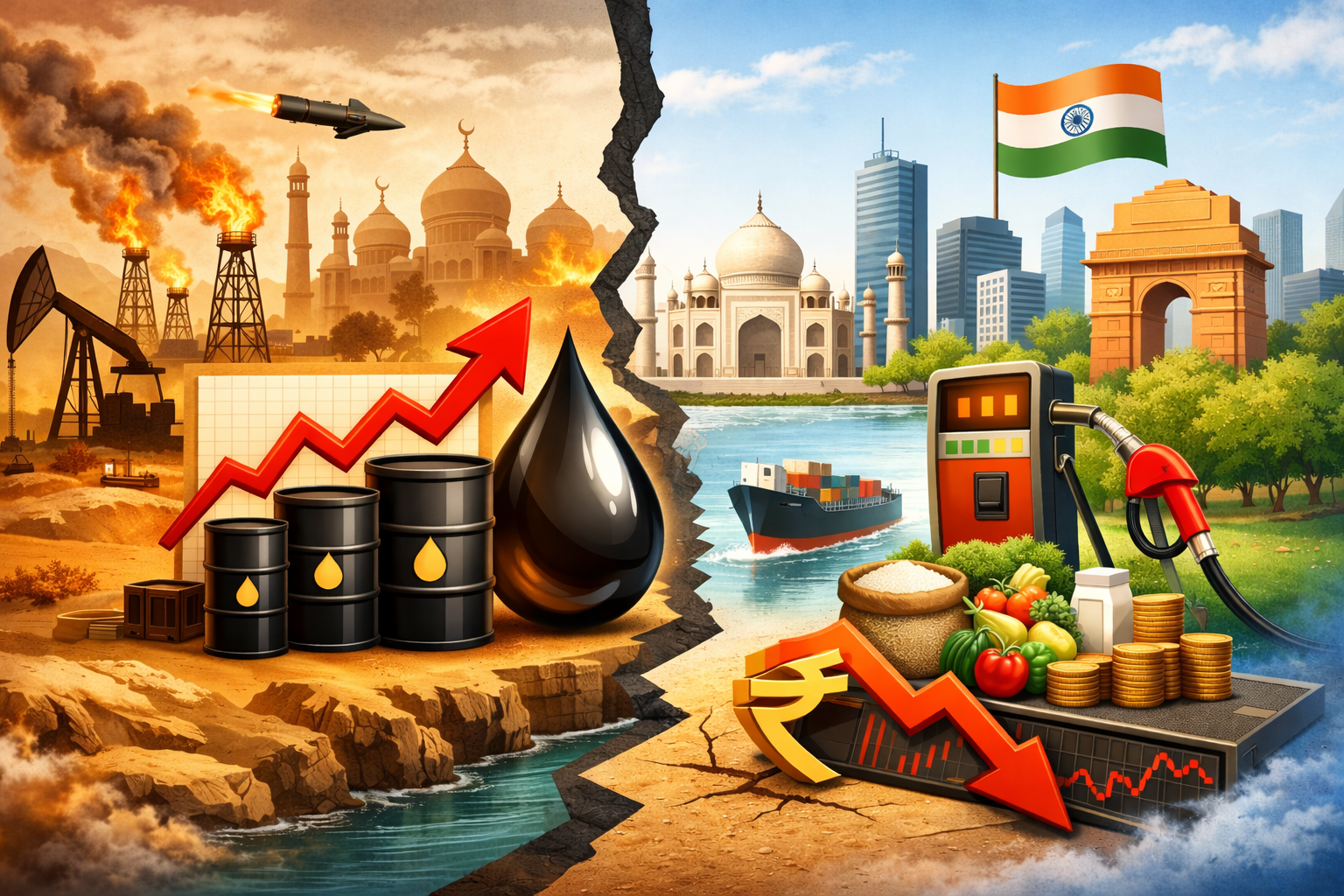
Global Oil Crisis: Surging Prices and India’s Economic Challenge
Middle East Oil Crisis India Impact: The ongoing Middle East conflict has triggered a severe global oil crisis, with Brent crude prices soaring past $115 per barrel amid critical disruptions in the Strait of Hormuz.
This vital chokepoint handles 20% of the world’s oil flows, now threatened by Houthi attacks and escalating U.S.-Iran tensions under President Trump, driving WTI crude to $111 per barrel and raising fears of $120+ levels. As of April 2026, no swift resolution appears in sight, intensifying worldwide supply shortages.
Middle East Oil Crisis India Impact: Roots of the Crisis
The crisis stems from U.S. and Israeli strikes on Iranian facilities, which halted key shipments and provoked strong retaliatory threats.
Iran’s rejection of ceasefire proposals without firm concessions has prolonged market volatility, with prices spiking 5-8% in single trading days.
OPEC has pledged a modest 206,000 barrels-per-day production increase, but it hinges on the Strait of Hormuz reopening; analysts from Goldman Sachs and Barclays predict sustained high prices if hostilities continue. While Ukraine-Russia energy truces provide some stability, global reserves are depleting rapidly as countries like Peru and Cuba resort to fuel rationing.
Price Surge Details
Trading data reveals Brent crude fluctuating between $109 and $118 per barrel, a nearly 60% monthly gain—Murban a premium light sweet crude oil produced primarily from Murban Bab oil field in Adu Dhabi at $114.84, and regional benchmarks like Arab Heavy reaching $121.94.
Domestically, Oil India’s record output from Rajasthan’s Thar Desert offers a small bright spot, though imports remain the dominant factor.
In India, crude futures have climbed to around ₹10,226 per barrel, while premium petrol variants from BPCL, HPCL, and IOCL have risen by ₹2.09 to ₹2.35 per liter since late March due to supply disruptions.
Direct Impacts on India
As a nation importing 85% of its oil—much of it routed through the Hormuz Strait—India is acutely vulnerable to these shocks.
Fuel prices have jumped sharply, burdening households and sectors like hospitality with LPG shortages that began in March.
The rupee’s slide to ₹92-94 per dollar exacerbates the pain, with every $10 rise in oil prices widening India’s current account deficit by 0.35-0.40% of GDP and adding 20-30 basis points to inflation.
In response, the government slashed excise duties on petrol and diesel by ₹13 per liter on March 27 to soften the blow, though limited strategic oil buffers and heavy subsidy reliance heighten ongoing risks.
Economic Ripple Effects
The import bill surge threatens to shave 0.1-0.2 percentage points off GDP growth for every $10 increase in oil prices, potentially dragging FY27 projections down to 6-6.4% if Brent hits $130.
Inflation may breach 4.5%, forcing the RBI to tighten policy and prompting cuts to infrastructure spending to stay within 4.3% fiscal deficit targets. Key sectors including autos, aviation, chemicals, textiles, and logistics face mounting costs and supply chain delays.
A 9% rupee depreciation in FY26 makes dollar-denominated oil even costlier, creating a feedback loop of higher expenses.
Stock markets have turned volatile amid foreign portfolio investor outflows and added pressures from U.S. tariffs.
Union Bank of India forecasts oil stabilizing at $80-85 by late 2026 under optimistic scenarios, but prolonged averages near $90 could limit GDP to 6.5% while spiking Consumer Price Index.
Broader Consequences and Outlook
Everyday consumers grapple with elevated prices on essentials as transportation costs climb, steadily eroding purchasing power.
Exporters contend with logistical bottlenecks, and energy-intensive industries struggle to absorb or pass on the hikes. On the global stage, oil at $150 per barrel risks tipping the U.S. into recession; for India, it spells stagflation without accelerated diversification efforts.
Long-term mitigation strategies include bolstering strategic reserves, ramping up renewable energy adoption, and pursuing diplomatic channels. India is exploring alternative supplies from Russia and boosting domestic exploration, but near-term challenges loom large. With the Strait of Hormuz’s fate uncertain, stakeholders must stay alert to RBI policy shifts and international negotiations for any signs of relief.
Read Also :- 1 अप्रैल से बदले नियम: आपकी जेब पर सीधा असर डालेंगे ये 15 बड़े बदलाव



 Rohan Umak