SC urges urgent consideration of nationwide policy to curb minors’ access to pornographic content, hits up Centre
The Supreme Court (SC) on Monday termed the need for a national action plan to curb minors’ access to pornographic content available online an issue of ‘paramount public importance,’ while directing that a petition seeking such measures be treated as a representation to the Union Government for appropriate consideration.
A bench of the top court, comprising Chief Justice of India (CJI) Surya Kant and Justices Joymalya Bagchi, as well as V Mohan noted that the issue warrants urgent attention in wake of concerns raised about children’s unrestricted access to obscene content on the internet. The court, however, clarified that the matter primarily falls within the domain of policymaking rather than judicial determination.

The bench remarked, “The issue raised is of paramount public importance. However, the subject issue is not a question of law to be determined by courts. It needs a policy primarily on the use of technological advancement,” while hearing a petition filed by advocate BL Jain.
Court says matter falls under purview of Executive
Appearing on behalf of the petitioner, advocate Varun Thakur contended that unrestricted access to pornographic content is inflicting harm on minors, besides contributing to unhealthy behavioural patterns. He submitted that easy availability of such content online was a matter of serious concern and required immediate intervention from the government.
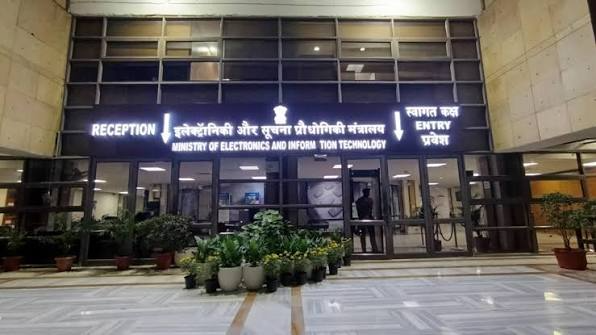
The Apex court’s bench, however, observed that framing policies on regulating online content and deploying technological safeguards falls under the purview of the executive, particularly the Ministry of Electronics and Information Technology (MeiTY). Accordingly, the court directed that the petition be forwarded to the Ministry concerned for consideration, expressing confidence that the authorities would pay heed to the issues highlighted.
The bench further remarked, “We have no reason to doubt that the authorities will give due attention to such concerns raised by the petitioner.”
Petitioner sheds light on alleged legal gap
During the hearing, advocate Thakur argued that the Information Technology (IT) Act, 2000, criminalises the publication and propagation of pornographic content but does not specifically penalise the act of watching such content. He further contended that this legal gap has limited the authorities’ ability to prevent access to pornography, particularly among minors.

Responding to the submissions, the Bench remarked, “You want to bring the moon on earth that we cannot do,” indicating the practical limitations of judicial intervention in matters requiring technological and policy-based solutions. Thereafter, the court disposed of the petition, directing the competent authority to examine the plea for framing the national policy and preparing an action plan to address the access of minors to online pornographic content.
Petition mentions rise in digital exposure
The petition stated that kids’ exposure to internet-enabled devices skyrocketed during the COVID-19 pandemic, when schools shifted to the online mode of education. It argued that no effective mechanism currently exists to prevent minors from accessing pornographic websites and other explicit material through such devices.

Furthermore, the plea claimed that millions of pornographic videos, including child sexual abuse material, are circulated online every year. While existing laws empower authorities to block public access to unlawful online content, the petitioner contended that the current enforcement does not suffice in tackling the proliferation of such media.