Raja Raghuvanshi murder case: Top Court cancels Sonam’s bail, orders her to surrender within 2 weeks
A striking development has emerged on Thursday in the sensational Raja Raghuvanshi murder case dating back to 2025, as the Supreme Court (SC) cancelled the bail granted to the key accused, Sonam Raghuvanshi. Notably, Sonam had conspired with her lover, Raj Kushwaha, and had pushed Raja to death in Meghalaya during their honeymoon in 2025.
The Apex court directed her to surrender before the authorities within two weeks, noting that her continued release could affect the ongoing trial adversely.
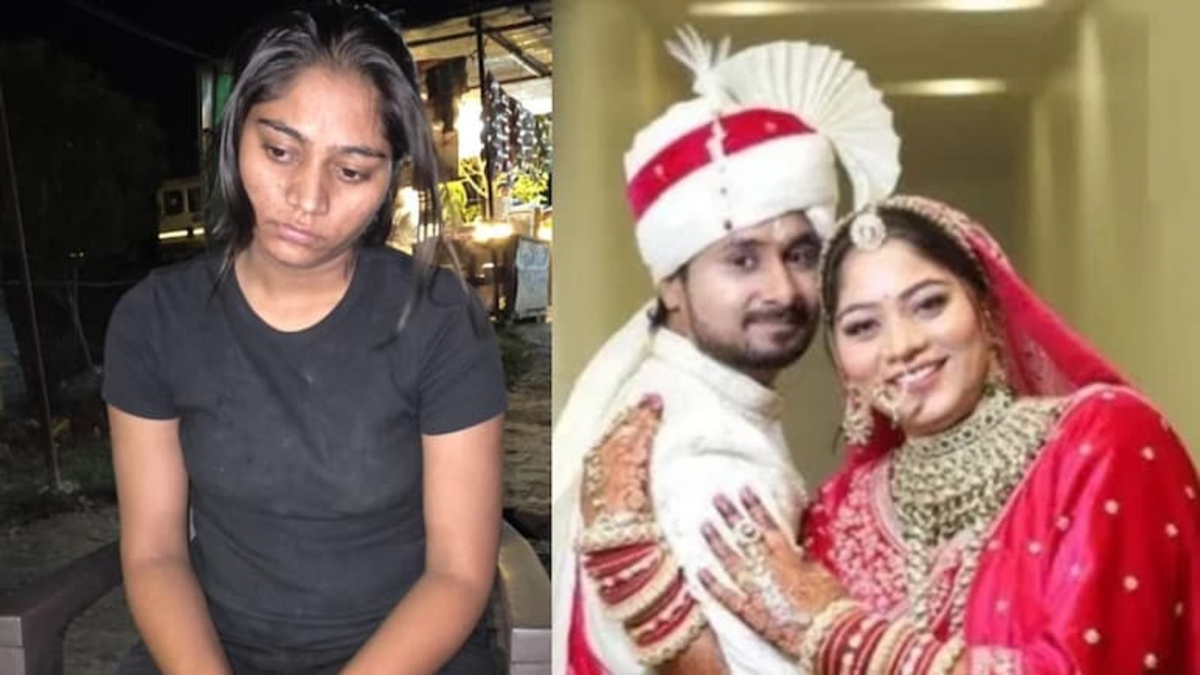
Top Court sets aside Meghalaya HC’s order
A bench of the top court, comprising Justice MM Sundresh and PB Varkale quashed the order passed by the Meghalaya High Court (HC) on June 29, which had granted bail to Sonam Raghuvanshi. While revoking the relief, the Bench clarified that the accused would be at liberty to seek fresh bail before the trial court if the proceedings fail to conclude within 6 months.
The bench remarked, “We are inclined to observe that the continued enlargement of the respondent will hinder the ongoing trial.”
The Meghalaya government informed the apex court that the chargesheet had already been filed in February 2026 and that the case was awaiting the framing of charges. The Supreme Court further observed that if the trial was not completed within six months, Sonam could file a fresh bail application, adding that neither the present order nor previous orders rejecting bail should prejudice the consideration of such a plea.

State challenges bail granted by HC
Sonam, who had been arrested by police on June 9, 2025, had secured bail from the Meghalaya HC on June 29, 2026. Subsequently, the state government challenged the order before the Apex court.
The HC had faulted the investigating agency for allegedly failing to communicate the grounds of arrest to the accused. Moreover, it criticised the police for what it called a ‘non-application of judicious mind’ after the arrest memo mistakenly mentioned Section 403 instead of Section 103 of the Bharatiya Nyaya Sanhita (BNS), which deals with punishment for murder.
Before the top court, the Meghalaya government contended that the incorrect section in the arrest memo was merely a typographical error and should not have served as the basis for granting bail in a case involving such serious allegations.
State defends probe, court clarifies legal position
Appearing on behalf of the state, Solicitor General Tushar Mehta submitted that the grounds of arrest had been duly communicated to Sonam when she was taken into custody on June 9, 2025. He also pointed out that this fact had also been recorded by the magistrate in Uttar Pradesh’s Ghazipur where she was produced before being taken to Meghalaya on transit remand.
Mehta argued that the allegations against the accused were grave ones and maintained that the case warranted continued custody.
Representing Sonam, Senior advocate Ardhendumauli Prasad argued that the HC had directed his client to remain in Shillong and cooperate with the trial. He also disputed the state’s assertion that she had voluntarily surrendered and submitted that the trial was likely to take considerable time as more than 50 witnesses were yet to be examined.
Defect curable, says SC
During the trial, the top court noted that the alleged non-supply of grounds of arrest constituted a ‘curable’ defect that could be remedied through re-arrest, if necessary. It then distinguished between a complete failure to furnish the grounds of arrest and providing inadequate reasons for the arrest.
The SC bench also agreed with the state’s submission that such objections ought to have been raised at the earliest opportunity. It observed that Sonam had not taken this ground in any of her three bail applications filed earlier, all of which had been rejected.