Supreme Court orders Delhi Police to assess threats, shield CJP’s teen protestor Nishu Azad
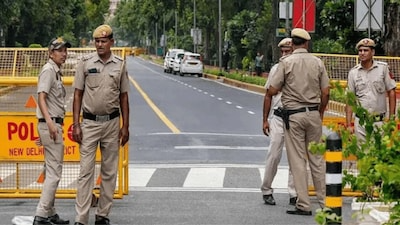
The Supreme Court (SC) on Wednesday directed the Delhi Police to assess the threat perception being faced by a 14-year-old girl, Nishu Azad, who was part of a protest led by the Cockroach Janta Party (CJP) at the Jantar Mantar in the national capital in July this year. The apex court has ordered the cops to provide her and her family necessary protection amid allegations of intimidation and harassment linked to violence during the CJP-led protests.

The directive was recorded in the court’s order uploaded after last week’s hearing in a batch of petitions concerning violence during the July 2026 protests.
Cops asked to probe alleged threats
The SC has specifically issued orders to the Delhi Police to assess the threat perception and take necessary measures to ensure Nishu and her family’s safety. They have also been asked to probe allegations that the minor and her kin were being harassed or threatened.
Moreover, the court also ordered the authorities to file a status report before the next hearing.
Nishu, who was part of the CJP-led protests against exam irregularities at Jantar Mantar in Delhi, reportedly fell prey to intimidation after pursuing a criminal case concerning an assault on her father.
The counsel representing her told the court that the family’s house had been pelted with stones upon, and that Nishy and her kin were repeatedly being issued threats and harassment. On September 10, the SC had taken serious note of the allegations, noting that a child could not be ‘browbeaten’ for pursuing criminal proceedings.
Case widens after July 2026 protest
Notably, the case is part of a broader group of petitions filed before the top court concerning violence and alleged police excesses during the CJP-led protests. The court had earlier formed a five-member High-Powered Enquiry Committee (HPEC), headed by former SC judge Justice R Subhash Reddy, to examine various aspects of the violence.
During the hearing held last week, a bench headed by Chief Justice of India (CJI) Surya Kant refused to entertain a request to reconstitute the committee despite objections from petitioners regarding its composition. The court said the HPEC functions under its supervision and submits its reports directly to the SC.
The bench also clarified the committee’s powers, saying that the HPEC cannot direct the registration of FIRs or order criminal investigations. Such powers rest with the court.

The committee is supposed to examine the allegations, identify victims and make recommendations, while the SC will retain the authority for final judicial scrutiny.
Metro station closures under court scrutiny
Furthermore, the bench also issued notices on a plea challenging the closure of metro stations during the protests.
While noting that courts refrain from interfering in law and order matters, the SC observed that judicial scrutiny could arise if measures adopted by authorities become disproportionate.