No law bars eating chicken over Ganga River: SC Judge slams arrest of Muslim youths during address at NLIU Bhopal
Judge Ujjal Bhuyan of the Supreme Court (SC) on Sunday strongly condemned the arrest of 14 Muslim youths in Uttar Pradesh over allegations that they consumed chicken biryani during an Iftar gathering on a boat ride on the Ganga River, remarking that no law prohibits eating chicken over the river.
The Justice’s remarks came at the 4th Memorial Lecture of Justice GP Singh at the National Law Institute University (NLIU) in Bhopal, where Bhuyan questioned the legal basis of arrests. He noted that the students who were arrested spent nearly three months in jail for an act that, by itself, does not constitute a criminal offence.
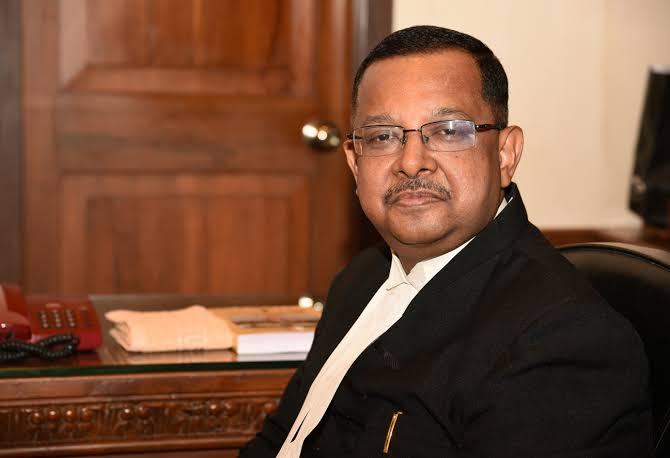
The SC judge asserted, “I am sure consuming chicken biryani is not an offence. It can’t be an offence…they were arrested for that very reason, and they had to remain in jail for three months.”
Arrests made over hurting religious sentiments of Hindus
The controversy dates back to March 2026, when the Varanasi Police had laid hands on 14 Muslim youths under various provisions of the Bharatiya Nyaya Sanhita (BNS), including Sections 298 and 299, on charges pertaining to outraging religious feelings, promoting enmity, creating public nuisance and violating the Water (Prevention and Control of Pollution) Act.

According to the complainants, the youth allegedly consumed chicken biryani while travelling on a boat during Iftar and disposed of the meat bones as well as the food leftovers into the Ganga, a river considered sacred in the Sanatan Dharma.
While shedding light on the incident, Justice Bhuyan maintained that consuming chicken over the river was not prohibited under any law, raising concerns over the use of criminal proceedings in such cases.
“Debate, dissent are the essence of democracy”
During his address at the institute, Justice Bhuyan also voiced concern over what he termed the ‘growing tendency’ to criminalise peaceful dissent and ordinary acts of protest. He opined, “The right to express one’s views and to demonstrate peacefully are fundamental freedoms of the citizens. Debate and dissent are the essence of democracy. Unfortunately, even normal acts are being criminalised.”
Furthermore, he observed that environmental activists were increasingly being viewed as offenders, merely for raising concerns, while students participating in campus protests often landed behind the bars for prolonged periods. Additionally, he noted that many students are suspended from educational institutions following their arrests and are compelled to approach courts before they can resume their studies.
Bhuyan questions restrictive bail conditions
Justice Bhuyan then questioned whether courts, by means of stringent bail provisions, were inadvertently discouraging citizens from exercising their democratic right to dissent. He asked, “Though the courts are responsive and do grant bail, many a time it is belated. But it is the restrictive conditions which are imposed while granting bail that are causing the greatest concern. By such restrictive orders, are the courts indirectly telling the citizens or discouraging the citizens not to express their dissent?”
Towards the end of his address, he took exception to the Bombay High Court’s (HC) refusal to permit a demonstration in solidarity with Palestine, describing some of the court’s observations as ‘very amusing.’ Recalling the proceedings, he underscored that the petitioners had been asked why they wished to protest over developments in Gaza rather than issues within India, while pointing out that India has recognised Palestine since long and also hosts a Palestinian Embassy.