WhatsApp chats, Telegram links: CBI’s chargesheet details digital trail behind NEET UG 2026 paper leak
The Central Bureau of Investigation (CBI), which has been spearheading the NEET UG 2026 paper leak, has filed a chargesheet on Friday in connection with the case before the Special CBI Court at Rouse Avenue. The chargesheet mentions that messaging applications like Telegram and WhatsApp, along with an extensive digital communication network, had been used to orchestrate the exam paper leak days before the May 3, 2026 test.
As per CBI officials, forensic analysis of cell phones seized during the probe unearthed chats, PDF documents, photographs of the question paper and other digital evidence. The CBI sleuths said the recovered digital evidence enabled them to reconstruct the sequence of events through which the confidential exam paper allegedly made its way from the National Testing Agency (NTA)-appointed subject experts to intermediaries and eventually to the exam-bound candidates.
Notably, the NEET UG 2026 exam was conducted on May 3 this year, but was later cancelled after allegations of a paper leak surfaced. The exam was conducted again on June 21, 2026. The paper leak issue devolved into a row, and reports of 21 students dying by suicide due to the irregularity emerged too.
Contact on Telegram, WhatsApp groups under scanner
The probe agency has alleged that the key accused, Yash Yadav, possessed PDF copies of the leaked NEET UG 2026 question paper and was in regular touch via Telegram with a person, whose number he had saved as ‘AP Broker’ in his cell phone. When the CBI sleuths delved into the details of the latter, they identified the contact as co-accused Shubham Madhukar Khairnar.

The CBI sleuths then claimed that similar digital evidence was recovered from the devices of several other accused. An alleged WhatsApp group titled ‘NEET 2026,’ discovered on the cell phone of another accused Manisha Sanjay Waghmare emerged as a key finding.
According to the CBI, the group formed part of a larger communication network allegedly used to circulate the leaked exam material. The probe indicates that the confidential NEET question paper did not move directly from the NTA subject experts to candidates, but instead passed through multiple intermediaries, including brokers and operators, before reaching students.
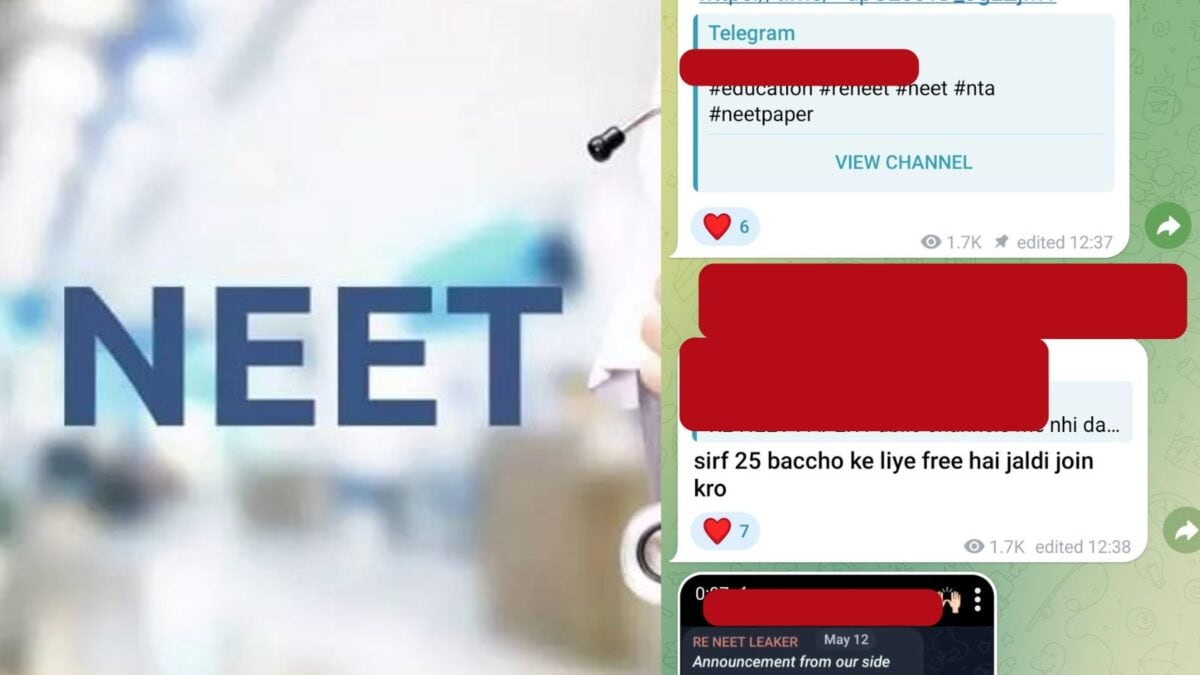
The agency said call detail records (CDR), mobile phone extraction reports and forensic analysis of seized electronic devices corroborated witness statements and helped establish how the accused allegedly coordinated with one another.
Blank cheques, original certificates allegedly used as security
Further probe into the dense leak racket also revealed what the CBI described as financial safeguards allegedly adopted by those involved in the operation. As mentioned in the chargesheet, blank signed cheques, original education certificates and other documents were exchanged as security to guarantee payments after delivery of the leaked exam paper.
The CBI has been treating these recoveries as corroborative evidence supporting the alleged commercial arrangement behind the paper leak.
As many as 13 accused, including three subject experts appointed by the NTA, have been chargesheeted under various provisions of the Bharatiya Nyaya Sanhita (BNS), the Prevention of Corruption Act and the Public Examinations (Prevention of Unfair Means) Act, 2024.
The agency has maintained that the electronic trail recovered during the probe constitutes crucial evidence against the accused and forms the backbone of its prosecution case. The CBI believes the digital records provide a comprehensive account of the alleged conspiracy and the communication channels used to facilitate one of the country’s most high-profile exam paper leak cases.