MP's Wildlife Steals the Spotlight as State CM Dr Yadav Hails Soaring Tiger Population
Showcasing Madhya Pradesh's growing stature as India's premier wildlife destination, state’s Chief Minister (CM) Dr Mohan Yadav on Wednesday said the state's tiger population has witnessed remarkable growth over the past decade, reaffirming its position as the country's 'Tiger State'. He expressed confidence that the next official census would record more than 1,000 tigers in the state.
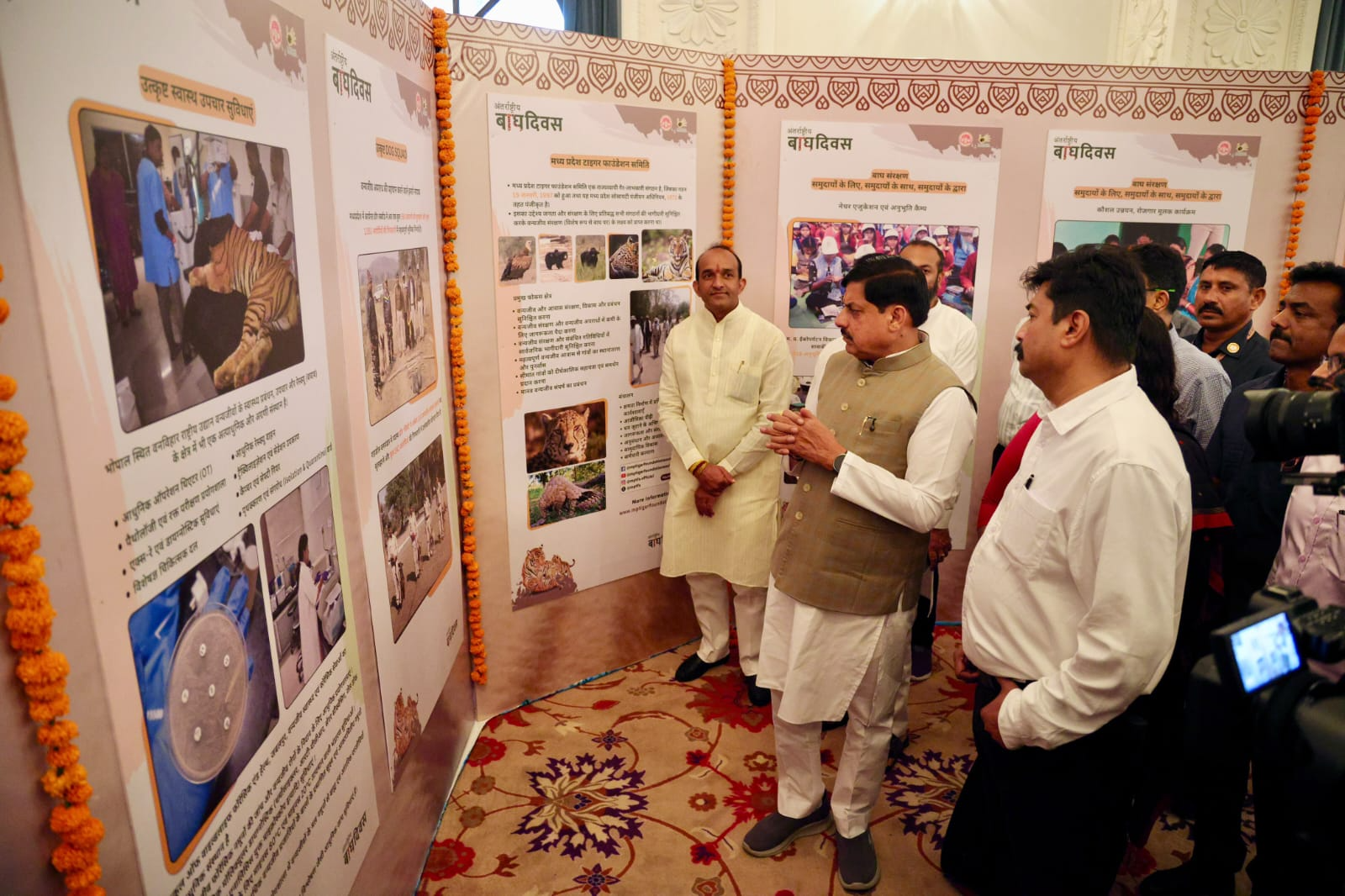
CM Dr Yadav was addressing the state-level International Tiger Day programme held at Kushabhau Thakre Auditorium in Bhopal. The event celebrated Madhya Pradesh's achievements in wildlife conservation and highlighted the government's continued focus on preserving forests and biodiversity through public participation and scientific management.
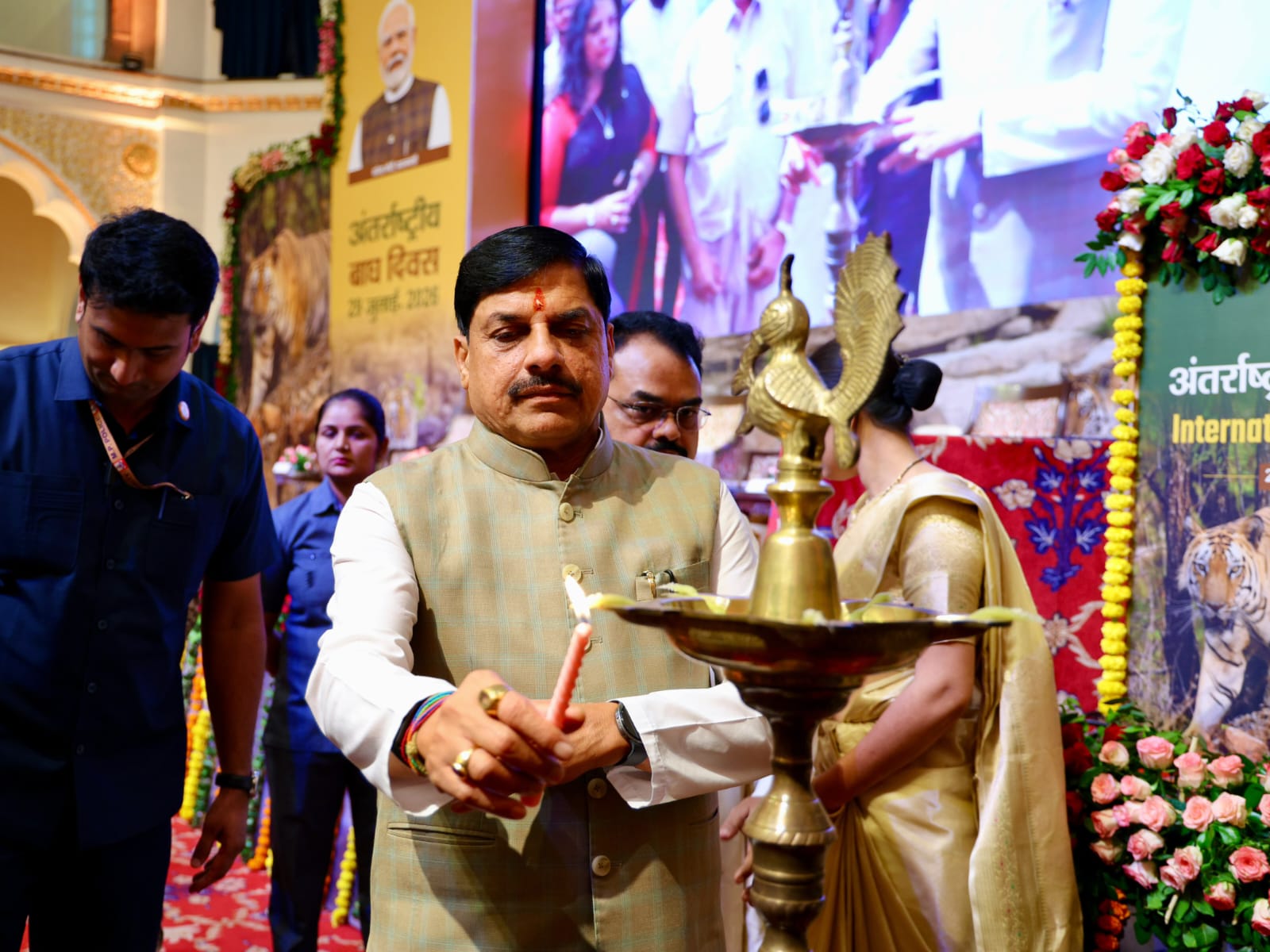
The Chief Minister inaugurated the programme by lighting the ceremonial lamp and later opened an exhibition showcasing wildlife conservation initiatives. He also flagged off newly inducted vehicles for forest and wildlife protection.
Books, documentaries and new tiger reserve logos unveiled
As part of the celebrations, CM Dr Yadav released several departmental publications, including Fluttering Jewels of Satpura, focusing on butterflies of Satpura, Pictorial Herbarium of Kanha Grasses, a compilation on wildlife rescue, Best Practices of Wildlife Conservation in Madhya Pradesh, and Biodiversity of Wild Mushrooms in Pench Tiger Reserve.
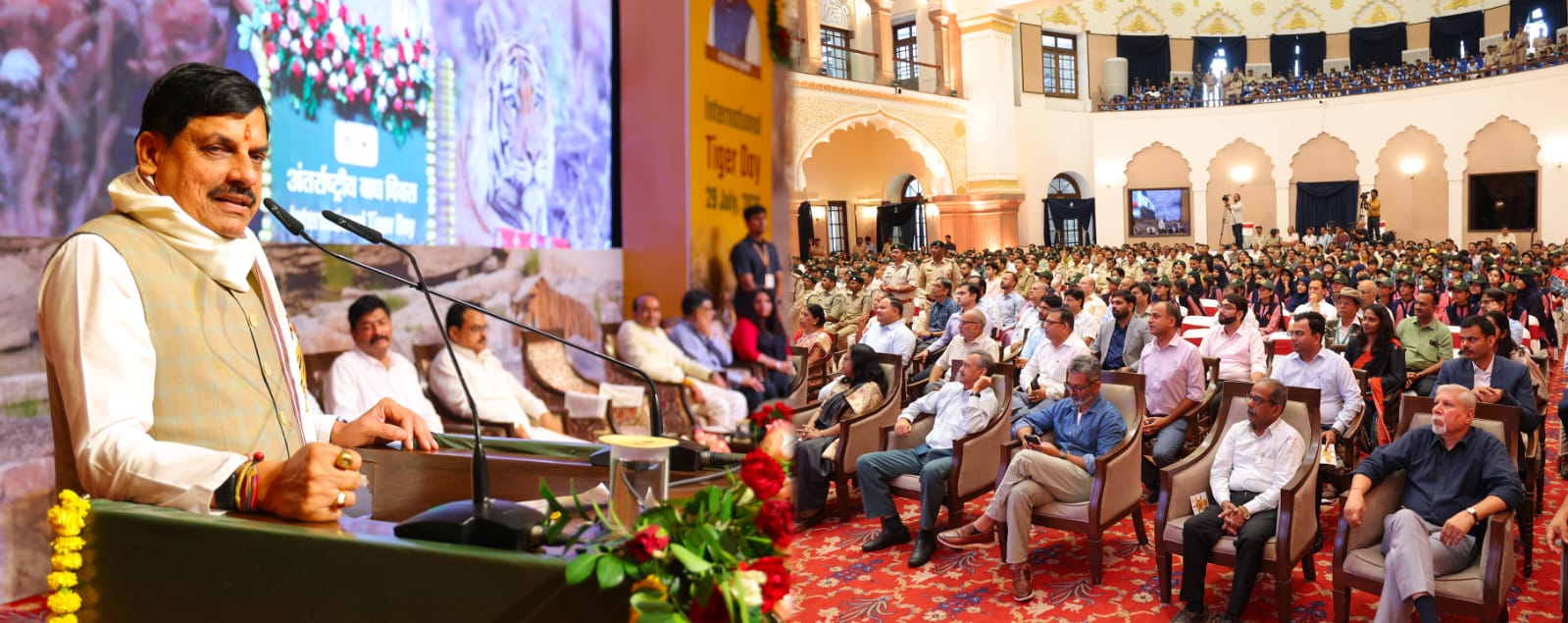
He also unveiled the official logos of the Ratapani Tiger Reserve and the Veerangana Durgavati Tiger Reserve, besides releasing teasers of documentaries on the reintroduction of swamp deer in Satpura Tiger Reserve and tiger rewilding efforts in Kanha Tiger Reserve.
The Chief Minister felicitated Padma Shri awardees Dr Narayan Vyas and Mohan Nagar, members of the State Wildlife Board, for their contributions to wildlife conservation. Awards were also presented to forest protection committees, eco-development committees, village forest committees and forest personnel for their outstanding work.
Tiger numbers set to cross 1,000
Addressing the gathering, CM Dr Yadav said respect for nature and wildlife has always been deeply rooted in Indian culture. He noted that many Hindu deities are associated with different animals, with Goddess Durga riding the tiger as a symbol of strength and courage.
He said Madhya Pradesh has made significant progress in conserving tigers, cheetahs, gharials, elephants, wild buffaloes and several other species.
Recalling the state's conservation journey, the Chief Minister said the tiger population had dwindled to double digits nearly 53 years ago. The number rose to around 250 in 2016 before increasing to 750 in the 2022 tiger census. He said the upcoming census is expected to place the tiger population above the 1,000-mark, crediting sustained conservation efforts under the guidance of Prime Minister (PM) Narendra Modi.
Public participation at the heart of conservation
The Chief Minister participated in the Veerangana Durgavati Tiger Reserve's public awareness campaign titled 'Ek Jan-Ek Patti- Jan Bhagidari, Sanrakshan Ki Shakti', painting a tiger's face on a ceramic leaf-shaped tile. The tiles will later adorn the Hinoti Tourism Gate of the tiger reserve, symbolising collective commitment towards forest and wildlife conservation.
School and college students presented a dance drama dedicated to tiger conservation, while artists from Pench Tiger Reserve honoured the Chief Minister with a traditional shawl.
Conservation beyond tigers
CM Dr Yadav highlighted several other conservation milestones, describing the Chambal as Asia's cleanest freshwater river and praising ongoing gharial conservation initiatives. He said gharials have also been introduced into rivers in the Kuno region.
The Chief Minister further stated that Madhya Pradesh has successfully reintroduced the wild buffalo, a species that had disappeared from the state nearly a century ago. He also announced that rhinoceroses would soon be brought to the state as part of future conservation efforts.
He noted that the Forest Department has effectively addressed human-elephant conflict over the past two years through modern technology and innovative management practices.