TN Govt approaches SC against Madras HC’s blanket ban on cow slaughter
The Tamil Nadu government on Wednesday knocked the doors of the Supreme Court (SC), challenging the Madras High Court’s (HC) order which imposed a blanket ban on the slaughter of cows across the state. The state government contended that the ruling comes as a contradiction to the existing statutory provisions and exceeds the scope of law enacted by the legislature.

In its Special Leave Petition (SLP), the state argued that the HC’s order dated May 27 is inconsistent with the provisions of the Tamil Nadu Animal Preservation Act, 1958, which permits the slaughter of cows above the age of 10 years who are unfit for breeding or work, provided a certificate is issued by the competent authority.
State says existing laws do not impose total ban
The government submitted that several laws regulating animal slaughter already prescribe the circumstances under which animals may be slaughtered, but none of them mandate a complete prohibition on cow slaughter.
The laws mentioned in the SLP include the Prevention of Cruelty to Animals Act, 1960, the Prevention of Cruelty to Animals (Slaughter House) Rules, 2001, the Tamil Nadu Urban Local Bodies Act, 1998, and the Tamil Nadu Urban Local Bodies Rules, 2023.
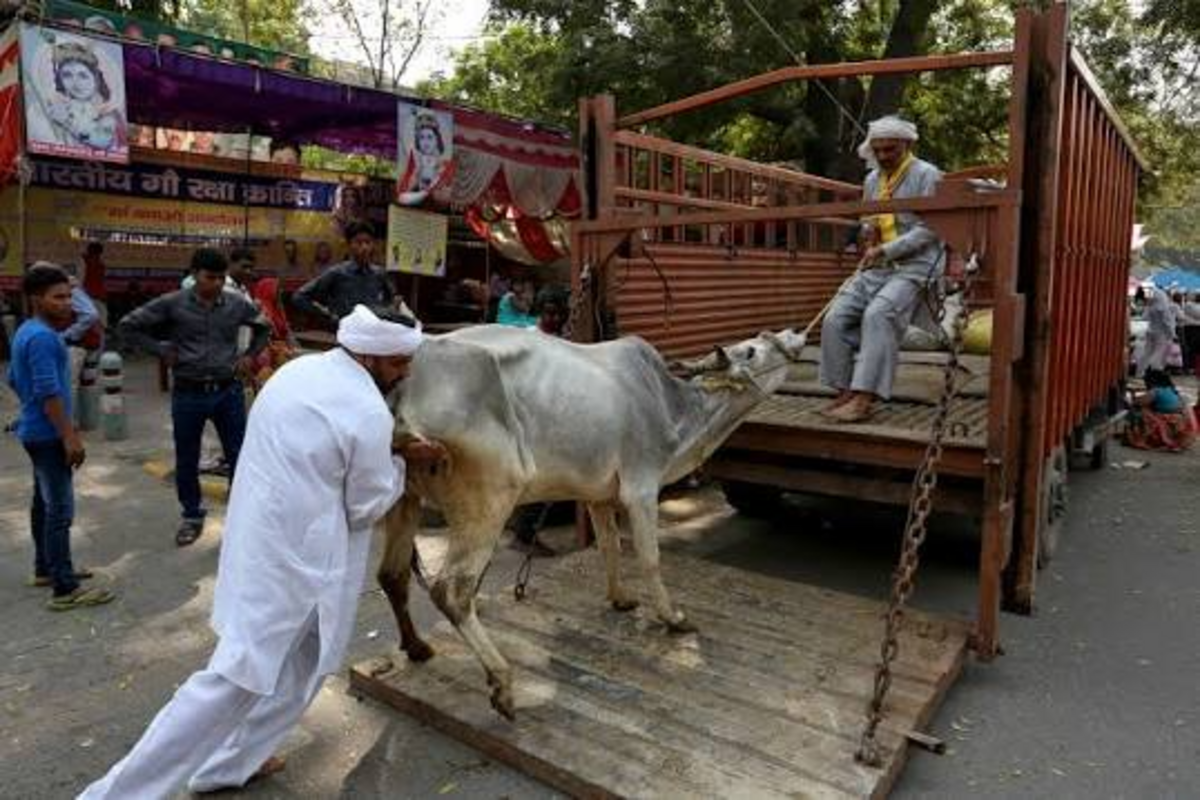
As per the state, by directing a blanket ban, the HC allegedly went beyond the framework laid down by the legislature and issued a directive that overrides the existing statutory scheme.
What prompted the order by the HC?
Notably, the impugned order was passed on May 27, 2026, a day before Bakrid, by a Division Bench of the Madras HC comprising Justice GR Swaminathan and Justice V Lakshminarayan while hearing a public interest litigation (PIL) filed by K Surya Prasanth, General Secretary of the Hindu Makkal Katchi.
The petitioner had sought the judiciary’s directions to ensure that cow slaughter, if permitted, was restricted to designated locations. However, the HC expanded the scope of the matter and instructed the government to impose a blanket ban on the slaughter of cows and calves across the state.
While pronouncing the verdict, the HC relied on an order issued by the government which mentioned that prohibiting cow slaughter would enhance milk production and strengthen the rural economy.
The Bench also cited previous judgments by the Supreme Court (SC), holding that cow slaughter is not an essential religious practice associated with Bakrid.
Govt terms verdict ‘internally contradictory’
The TN government maintained that while the HC was justified in directing that animal slaughter be confined to authorised locations, its subsequent order imposing a complete statewide ban is legally unsustainable.
As underlined in the SLP, the original PIL was limited to preventing cow slaughter in public places in Coimbatore during Bakrid. The government contended that the Division Bench granted relief that had not even been sought by the petitioner by extending the prohibition to designated slaughterhouses too.

The state further said the HC’s verdict was internally contradictory, underscoring that it simultaneously recognised the need to restrict slaughter to authorised facilities while imposing an absolute ban across the state.
The government’s petition has also challenged the HC’s observation that authorities had admitted cows were being, or were likely to be, slaughtered in public places.
Refuting this finding, the government said the police had categorically informed the HC through their counter affidavit that preventive measures had already been placed to ensure no slaughter took place in public areas. It added that any ritual sacrifice, where legally permissible, would take place only in enclosed, non-public locations.