
 Shubh Laabh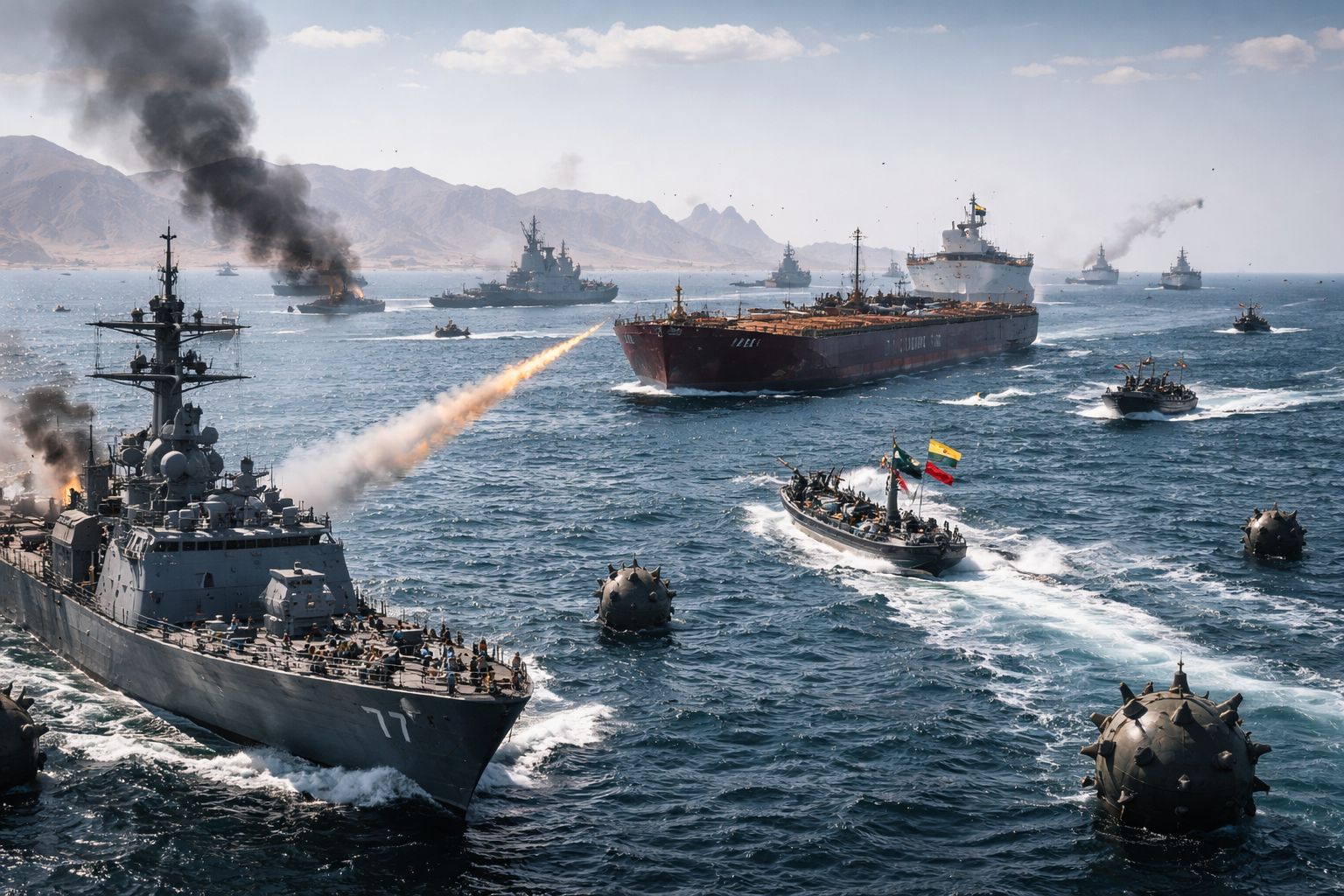
How US‑Iran Confrontation Is Reshaping Global Energy Trade
Strait of Hormuz 2026: The Strait of Hormuz is now caught in a US‑Iran naval blockade‑with‑tolls standoff, disrupting global oil flows and raising premia. Read the latest developments, market impact, and what it means for India and the world.
Strait of Hormuz 2026: A Chokepoint at the Edge of War
The Strait of Hormuz, the world’s busiest oil corridor, has become the new front line of the 2026 US‑Iran conflict. As of 14 April 2026, the waterway is effectively operating under a dual regime: Iran controlling transit via a“permission‑and‑toll” system and the United States enforcing a naval blockade on all ships entering or leaving Iranian ports along the strait.
This dual‑closure dynamic has pared daily transits from over 100 vessels to a trickle, spiked insurance and freight costs, and forced markets to price in a prolonged energy‑security crisis.
What Is Happening in the Strait of Hormuz?
Since late February 2026, Iran has progressively restricted access through the Strait, requiring vessels to obtain permission and pay tolls to transit via Larak Island while warning of kinetic risks for non‑compliant ships. Satellite and maritime‑intelligence data show normal crossings have fallen from roughly 70–80 a day to under a dozen, with many tankers going “dark” or rerouting to avoid the chokepoint.
On 12 April, President Donald Trump announced that the US Navy would begin a full‑scale blockade of Iranian ports and coastal areas along the Strait of Hormuz, with Central Command stating that US warships would prevent ships from entering or exiting Iranian ports and destroy Iranian‑laid mines. The US insists that vessels travelling between non‑Iranian Gulf ports will not be impeded, but the practical effect is a hardening of restrictions around the Iranian side of the waterway.
Iran’s Toll Regime vs US Naval Blockade
Iran’s approach has effectively turned the strait into a managed, selective corridor. Major Iranian‑linked tankers such as the Murlkishan and Peach Gulf have crossed via Larak‑based routes in recent days, while other commercial operators, especially Western‑linked firms, have sharply reduced or suspended transits. Tehran has framed this as a “defensive” measure against foreign aggression, but many energy analysts argue it amounts to a de‑facto economic weapon.
The US response is legally and politically distinct: Washington describes the blockade as targeting only Iranian‑port traffic and mine‑clearance operations, not a blanket closure of the strait. In practice, the US Navy has deployed mine‑hunter ships and strike‑group assets into the Strait, raising the risk of confrontation with Iranian fast‑attack craft and coastal missile batteries.
Iran has denounced the US move as “piracy,” “economic terrorism,” and a violation of the fragile ceasefire, while Washington argues that blocking Iran’s remaining oil‑export routes will force Tehran back to the negotiating table.
Oil Markets and Global Shipping Impact
The de‑escalation of physical attacks has not eased the financing side of the crisis. War‑risk insurance rates have surged, and many major carriers are avoiding the Strait in favour of longer routes around the Cape of Good Hope, even for non‑Iranian cargo. This shift has lengthened voyage times, tightened tanker capacity, and contributed to oil prices trading above 100 dollars per barrel, with some benchmark blends pushing higher.
The transportation of some Iranian‑linked crude has continued at reduced volumes, but the overall throughput from Persian‑Gulf producers is lower than pre‑war levels, magnifying the impact on global supply‑demand balances. For refiners in Asia and Europe, this translates into higher landed‑cost oil, more volatile schedules, and a need to diversify supply sources and storage locations.
India’s Energy Security Under Pressure
For India, the Strait of Hormuz remains a core artery of crude imports. Historically, over 60–70 percent of India’s oil has passed through the Gulf and Hormuz‑linked routes, with Iran a significant supplier despite sanctions. A prolonged standoff can force Indian refiners to accept higher freight and insurance costs, or to expand purchases from the Atlantic Basin, Russia, and alternative sources, often at a premium.
New Delhi is also weighing the risk that any escalation—such as a direct clash between US and Iranian vessels in the Strait could trigger a broader regional flare‑up, further disrupting regional trade lanes and raising the possibility of additional sanctions‑linked complications for Indian‑flagged or India‑linked vessels.
Diplomatic Maneouvrings and Ceasefire Fragility
Parallel to the blockade, US and Iranian teams have been reported to be preparing to return to talks in Islamabad, following a partial ceasefire that has so far failed to stabilize the Strait. Senior US officials say the blockade is designed to raise Iran’s economic costs and force Tehran to accept a more stringent deal, including a full reopening of the Strait and a crackdown on regional proxies.
However, Iran rejects key US demands and has warned that any military escalation around Hormuz could break the ceasefire entirely. Regional allies such as Saudi Arabia are quietly urging Washington to scale back the blockade, fearing retaliatory Iranian pressure on other chokepoints like Bab al‑Mandeb and the Red Sea corridor.
Read Also:- विदेशी बनाम देसी
Scenarios for the Strait of Hormuz
Several broad scenarios are now in play:
- Short‑term de‑escalation: The US‑Iran talks in Islamabad could produce a modest extension of the ceasefire, with Iran relaxing its tolls and the US easing enforcement against some non‑military vessels, easing insurance and freight costs.
- Prolonged low‑intensity blockade: If talks stall, the world may live with a semi‑permissive Strait—where only selected Iranian‑linked tankers and certain “neutral” vessels transit—while most global trade shifts to longer routes.
- Sudden flare‑up: A direct ship‑on‑ship clash in the Strait could trigger a wider regional conflict, pushing global oil prices far higher and forcing emergency stock‑draw policies and ad‑hoc trade corridors.
Why the Strait of Hormuz Still Matters ?
The Strait of Hormuz is no longer just a passage; it has become a geopolitical bargaining chip and a financial stress‑test for global energy markets. Even if the US and Iran manage to avoid a full‑scale war, the dual‑blockade regime around Hormuz will likely persist for months, keeping oil prices elevated, insuring premiums high, and forcing India and other import‑dependent economies to rethink their energy‑security posture.
For policymakers and investors, the lesson is clear, any disruption at Hormuz is no longer a hypothetical tail‑risk but a structural feature of a more volatile global energy order.
Read More:- Today’s Global Flashpoint



 Rohan Umak