 Shubh Laabh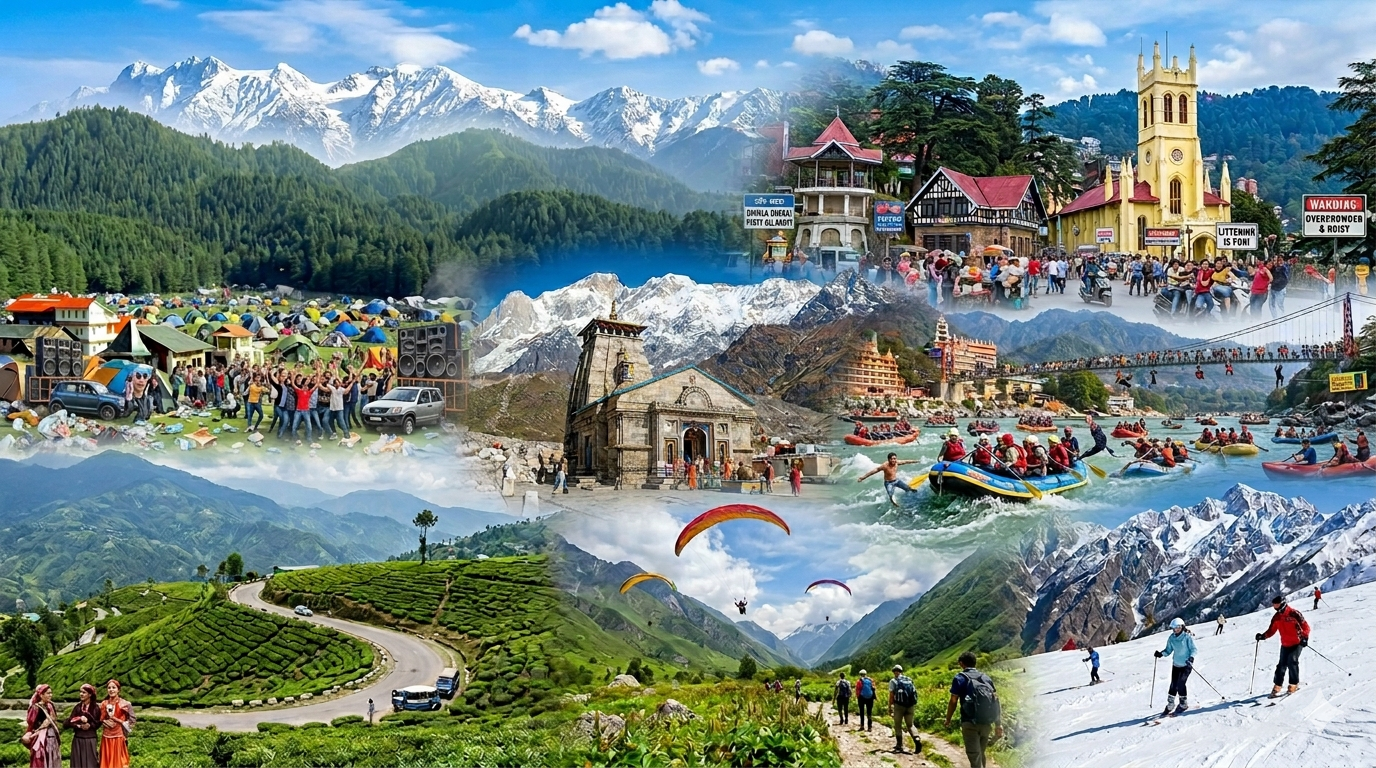
Title: Rowdy Tourism in India: The Dark Side of Domestic Travel
India’s tourism sector has seen a massive surge in domestic travel over the past few years. With more Indians exploring hill stations, beaches, pilgrimage towns, and wildlife destinations, tourism has become a vital source of income for local communities. However, alongside this growth, a troubling trend has emerged—“rowdy tourism,” a term increasingly used to describe the loud, disrespectful, and often aggressive behaviour of some domestic tourists.
What Is Rowdy Tourism?
“Rowdy tourism” is not an official legal term, but a social label for irresponsible and inconsiderate tourist behaviour. This includes trespassing into restricted areas, vandalizing property, driving recklessly, playing loud music at odd hours, public drinking, littering, and harassing locals or fellow travellers. Such conduct is now commonly reported in popular destinations like Rishikesh, Nainital, Mussoorie, Manali, Goa, and various hill towns across the Himalayas.
While not all tourists fall into this category, the actions of a visible minority are enough to tarnish the image of entire destinations and strain local tolerance.
Why Is It Becoming a Concern?
Several factors explain the rise of rowdy tourism:
- Social-media culture: The pressure to create “viral” reels and Instagram posts leads some visitors to pose on roads, in residential lanes, or in eco‑sensitive areas, ignoring safety and local rules.
- Weak enforcement: In many destinations, traffic and public‑order rules are not strictly enforced, allowing tourists to drive fast, honk excessively, and park indiscriminately.
- Lack of awareness: Many domestic tourists are unaware of local customs, environmental sensitivity, and basic civic etiquette, treating holiday spots as playgrounds rather than living communities.
Incidents such as loud parties in snow‑covered villages, public drunkenness in religious towns, and tourists blocking roads for photos have triggered anger among residents and even local governments.
Impact on Destinations and Local Communities
Rowdy tourism brings several negative consequences:
- Environmental strain: Increased littering, noise pollution, and pressure on fragile ecologies strain waste‑management systems and damage natural landscapes.
- Social friction: Local communities feel invaded when their quiet streets are turned into noisy party zones, temples are disturbed by reckless tourists, and village life is disrupted for commercial tourism gains.
- Reputation damage: Negative viral videos and news reports can scare away responsible tourists and international visitors, hurting long‑term tourism potential.
In some places, local panchayats and residents’ groups have even threatened or imposed temporary tourist bans to protect their peace and safety.
How Authorities and Society Are Responding
In response, authorities and civil society are taking several steps:
- Stricter policing and fines: States like Uttarakhand and Himachal Pradesh are increasing on‑ground presence, planning stricter penalties for public nuisance, and considering on‑spot fines for reckless driving and harassment.
- Public awareness campaigns: Tourism departments and NGOs are promoting “responsible tourism” campaigns, urging visitors to avoid public drinking, respect local culture, and follow traffic norms.
- Community‑led actions: Some hill towns and villages have used social media, local gatherings, and symbolic bans to send a clear message: hospitality is warm, but it is not unlimited.
The Way Forward : Promoting Responsible Tourism
To curb rowdy tourism without choking growth, a balanced approach is needed:
- Stronger regulations and enforcement, especially in ecologically sensitive zones and religious towns.
- Education and awareness for domestic tourists, starting from schools, social media, and pre‑travel information portals.
- Community participation in tourism planning, so locals have a say in how many visitors are allowed and what behaviour is expected.
Ultimately, rowdy tourism is not an inevitable side‑effect of travel; it is a reflection of attitudes that can be changed. By promoting courtesy, respect for the environment, and empathy for local communities, India can safeguard both its tourism industry and its cultural heritage
Read More:- RPF-GRP team rescues 163 boys from Maharashtra-bound train in MP, authorities suspect child trafficking
Read Also:- विदेशी बनाम देसी


 Rohan Umak