
 Shubh Laabh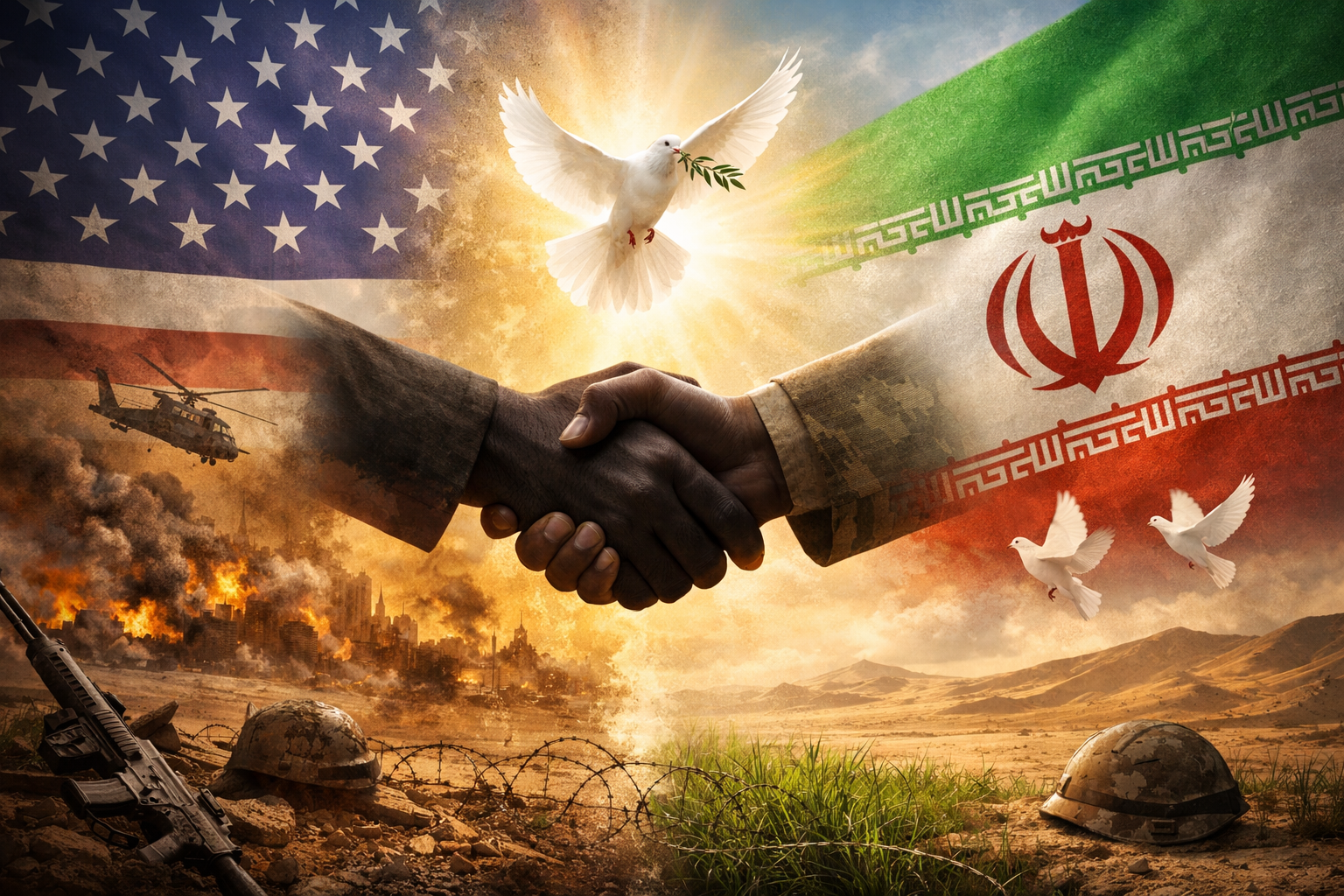
US–Iran War 2026: Trump Announces Two‑Week Ceasefire as Strait of Hormuz Talks Advance
US Iran ceasefire 2026: The US and Iran have agreed to a two‑week ceasefire in the 2026 war, tied to reopening the Strait of Hormuz. Read the latest updates, key terms, and what this means for global oil markets and regional stability.
What Just Happened?
U.S. President Donald Trump has announced a two‑week suspension of military strikes against Iran, hours before an 8 p.m. ET deadline he had set for Tehran to comply with U.S. demands. The move follows a Pakistan‑brokered proposal for a “double‑sided ceasefire,” under which Iran agrees to reopen the Strait of Hormuz while Washington halts planned attacks on Iranian infrastructure.
Iran’s Supreme National Security Council has confirmed it is ready to honor the temporary truce but has stressed that any longer‑term deal must include broader security and nuclear‑related guarantees.
What Led to the 2026 US–Iran War?
The conflict began earlier in 2026 with a series of U.S. and Israeli airstrikes inside Iran, including the killing of Supreme Leader Ali Khamenei and hundreds of other casualties. In retaliation, Iran launched missile and drone attacks on U.S. bases and allied countries in the Middle East, turning the crisis into a full‑scale regional war.
Over the past 39 days, fighting has centered on :
- Repeated strikes on or near Iran’s Bushehr nuclear site, raising global non‑proliferation concerns.
- Bombardment of Iranian oil, petrochemical, and transport infrastructure, disrupting exports and driving up energy prices.
- A high‑profile incident involving a downed U.S. fighter jet and a missing American pilot, prompting joint U.S.–Israeli search operations while Iranian forces also hunted for the crew.
Why the Strait of Hormuz Is the Key Issue
The Strait of Hormuz is one of the world’s most critical maritime chokepoints, through which about one‑fifth of global seaborne oil flows. When Iran restricted or effectively closed the Strait, shipping insurers and energy traders reacted sharply, pushing crude prices higher and triggering fears of prolonged supply disruptions.
Trump has repeatedly warned that reopening the Strait and guaranteeing safe passage for oil is a top priority; he has even floated the idea of the U.S. charging a “toll” for security‑enhanced passage.
Iran, in turn, insists it will not return the Strait to its pre‑war status, arguing that it must retain control and leverage over this strategic waterway.
US Iran ceasefire 2026: The 10‑Point Ceasefire Plan and “Islamabad Accord”
Under the Pakistan‑backed framework, the ceasefire is structured in two phases :
- An immediate two‑week halt on U.S. and Israeli strikes against Iran, in exchange for Iran reopening and coordinating safe transit through the Strait of Hormuz.
- A 15–20‑day window for both sides to negotiate a broader deal, codified in a draft “Islamabad Accord” that would cover security guarantees, sanctions relief, and nuclear‑related issues.
Iran’s Supreme National Security Council has presented a 10‑point proposal outlining conditions for a longer‑term ceasefire, including U.S. guarantees on non‑interference, sanctions relief, and limits on future military operations. Washington has not yet publicly accepted all 10 points, calling them a “starting point” for talks.
What “Two‑Week Ceasefire” Really Means
Despite the positive headlines, the current agreement is not a peace treaty but a fragile, time‑bound pause in hostilities:
- The U.S. will suspend bombing and missile attacks on Iranian infrastructure only if the Strait of Hormuz remains open and Iran cooperates with monitoring arrangements.
- Iran has agreed to allow safe passage through the Strait but has left room for future restrictions or coordination under its own terms.
- Both sides are preparing for the possibility of renewed strikes if negotiations in Islamabad or other capitals fail to produce a wider deal.
Legal and human‑rights experts warn that Trump’s earlier threats to destroy bridges, power plants, and desalination infrastructure in Iran could amount to potential war crimes, further complicating any long‑term diplomatic progress.
Global and Economic Impacts
The war and the current ceasefire have major ripple effects beyond the battlefield :
- Oil markets: Brent and WTI crude remain volatile; traders are watching the Strait closely, insurance premiums, and any new naval incidents.
- Regional security: Gulf states, Iraq, Lebanon, and neighboring countries are on high alert for spillover attacks, missile strikes, and proxy clashes.
- Diplomacy: The UN, European powers, China, and Russia are urging Washington and Tehran to extend the ceasefire and avoid a broader regional war.
For India and other Asian importers, the dispute affects energy costs, shipping schedules, and maritime‑insurance premiums across the Persian Gulf and Arabian Sea.
What to Watch in the Next Two Weeks
For analysts, traders, and policymakers, the following key indicators will determine whether this ceasefire becomes a stepping stone to peace or simply a short breathing space :
- Strait of Hormuz operations: Any new blockades, military incidents, or sudden closures would signal a breakdown of the truce.
- Talks in Islamabad: Progress (or failure) in Pakistani‑mediated negotiations on the 10‑point plan and the broader Islamabad Accord.
- Military incidents: New strikes, downed aircraft, or cyberattacks that could quickly reignite the conflict.
Read More: – RBI का बड़ा ऐलान: रेपो रेट फिर 5.25% पर स्थिर, EMI पर नहीं पड़ेगा असर


 Rohan Umak