
 Shubh Laabh
Maa Siddhidatri Navratri 2026: It’s not just a single date, but the culmination of a nine-day spiritual journey we began with a resolution on Pratipada. Today’s presiding deity is Maa Siddhidatri. “Siddhidatri” means “Goddess who grants Siddhis.” This form represents not only devotion but also the highest peak of yoga, tantra, and spiritual excellence.
The Devi Mahatmya of the Markandeya Purana describes that in ancient times, Lord Shiva performed severe penance for Maa Siddhidatri. Pleased with continuous austerities for thousands of years, Mother granted Shiva eight perfections (Anima, Mahima, Garima, Laghima, Prapti, Prakamya, Ishitwa, Vashitwa) and nine treasures. This is why half of Shiva’s body became the form of the mother, who is called Ardhanarisvara.
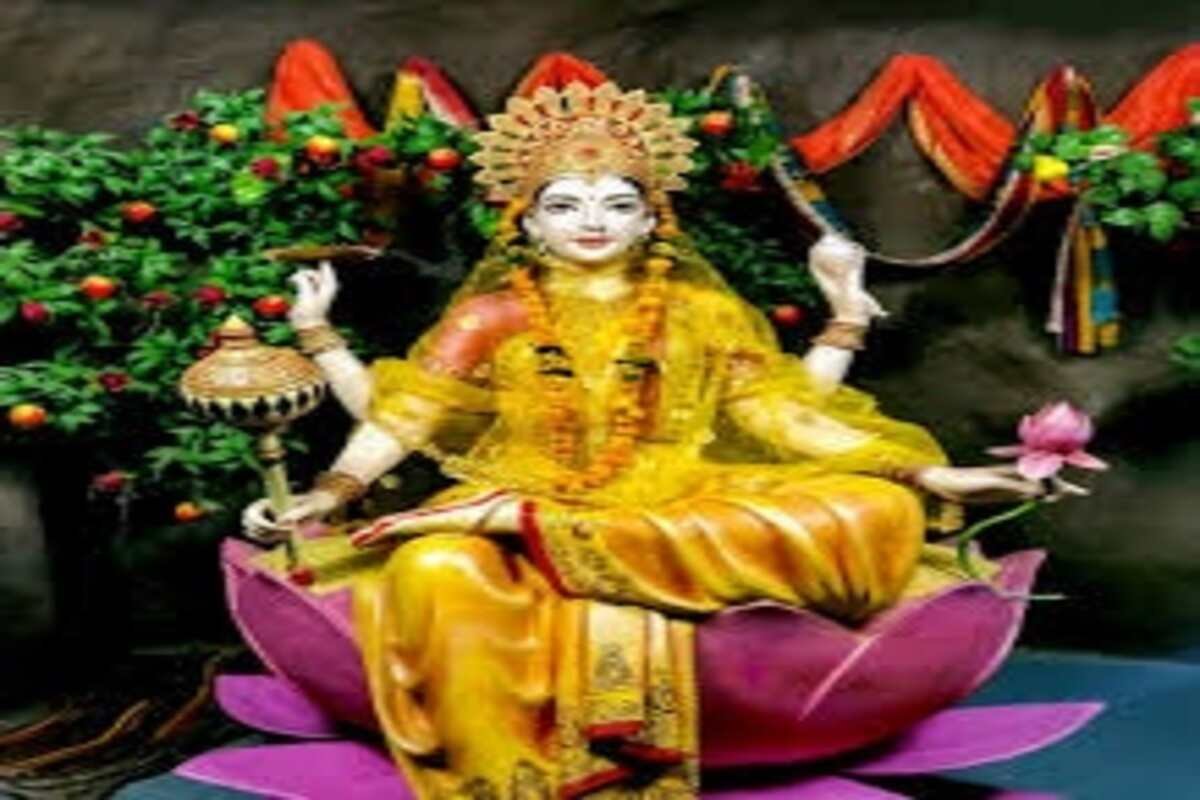
Goddess distributed Siddhis to gods, sages, devotees
According to another legend, at the dawn of creation, when the world was desolate, the Mother Goddess manifested all the Siddhis through her power and distributed them among the gods, sages, and devotees. The scriptures prescribe a special worship of the Mother Goddess on the ninth day of Navratri, as it marks the culmination of austerity. Devotees attain nirvana through the Mother Goddess’s grace.
The form of Maa Siddhidatri is extremely beautiful and divine. She sits on a lotus seat, symbolizing purity and spiritual progress. She holds a lotus flower in her right hand, a mace in her left hand, a chakra in her right lower hand, and a conch in her left lower hand. Her vehicle is a lion, symbolizing strength and courage. Her face is calm and compassionate, with eyes as large as lotuses. She is golden or fair in complexion, with her hair reflecting the moon’s radiance. The weapons held in her four arms convey victory in all directions. By having such a darshan, the devotee automatically attains all siddhis. The Puranas describe that merely seeing the Mother makes impossible tasks possible.
According to the Markandeya Purana, Maa Siddhidatri bestows eight major siddhis upon her devotees. These eight siddhis have profound implications in the context of modern science and psychology. It was Mother Siddhidatri who blessed Shiva with these eight siddhis and nine nidhis, which he acquired, becoming known as Ardhanarishvara.
These eight siddhis are:
- Anima: One’s body is as subtle as an atom
- Mahama: Making mischief into a giant.
- Garima: To become extremely heavy.
- Laghima: Making the body weightless.
- Receipt: Immediate receipt of the desired object.
- Prakamya: Perfection of will.
- Godliness: The ability to lead divinely.
- Vashitva: Complete control over the senses and circumstances.
Nine Nidhis
- Padma Nidhi: This is a symbol of virtuous qualities. Those who possess this treasure believe in charity and philanthropy. Their wealth endures for generations.
- Mahapadma Nidhi: This is bigger than the Padma Nidhi. It symbolizes righteousness and purity. Upon receiving this treasure, a great philanthropist is born in one’s family.
- Neel Nidhi: It is a mixture of Sattva and Raja qualities. It symbolizes the steady growth of business and wealth.
- Mukunda Nidhi: This is primarily a treasure of art, music, and royal pomp. It is dominated by the Rajoguna (the mode of passion) and bestows social prestige upon a person.
- Nanda Nidhi: It symbolizes happiness, peace, and longevity. It provides a person with a combination of material and spiritual satisfaction.
- Makara Nidhi: This is a symbol of weapons and military power. This treasury was considered extremely important for kings and rulers.
- Tortoise Treasure: This treasure symbolizes self-protection and accumulation. It gives a person the wisdom to protect their wealth.
- Shankha Nidhi: This treasury is for personal pleasure. It symbolizes material comforts and luxuries.
- Kharva Nidhi: Also known as a mixed treasure, it symbolizes victory over the enemy and justice.
In the path of yoga, today marks the awakening of the Sahasrara Chakra. When a practitioner’s Kundalini Shakti rises from the Muladhara to the Sahasrara, they experience “Kaivalya,” or completeness. Mother Siddhidatri is the presiding deity of this state. In Tantra Shastra, she is considered the “culmination of perfection.” When a practitioner loses their individual identity and merges with cosmic consciousness, they attain “Siddhi.” Here, “Siddhi” does not mean magic, but rather realizing their own truth.
No, rather one has to know the truth about oneself.
Maa Siddhadatri Meditation Mantra
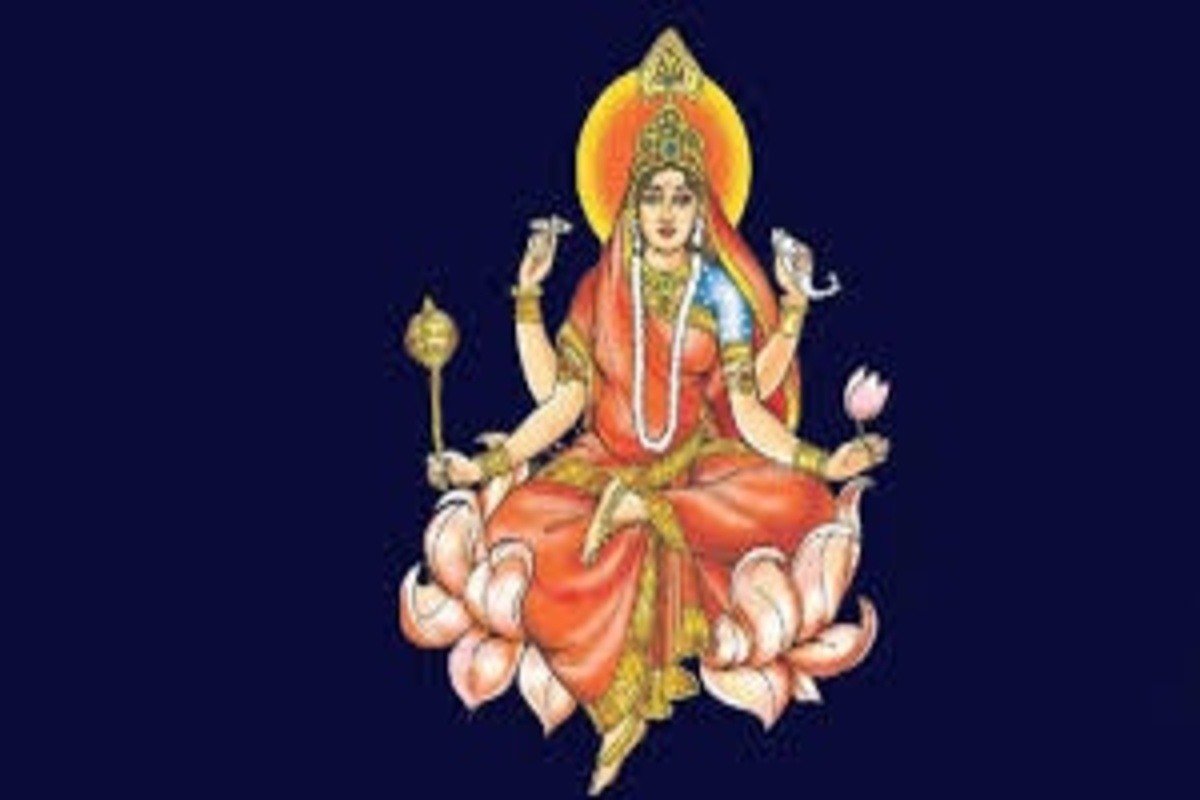
The meditation mantra of Mother Siddhadatri – I worship Shekharam, created by the half-moon for the fulfillment of the desired wishes. The four-armed goddess Siddhidatri is situated on the lotus flower. The ninth Durga, golden-coloured, seated in the Nirvana Chakra, has three eyes. We worship the goddess who holds the conch, wheel, club and lotus feet. Meaning: I offer my obeisances to Maa Siddhidatri, who holds the crescent moon on her head, who sits on the lotus, who has four arms and who is glorious. who is situated in the Nirvana Chakra (Sahasrara), who has three eyes and who holds in her hands a conch, chakra, mace and lotus.
मां सिद्धदात्री का ध्यान मंत्र –
वन्दे वांछित मनोरथार्थ चन्द्रार्धकृत शेखराम। कमलस्थितां चतुर्भुजा सिद्धीदात्री यशस्विनीम ॥ स्वर्णवर्णा निर्वाणचक्रस्थितां नवम दुर्गा त्रिलोचनीम। शंख, चक्र, गदा, पदमधरां सिद्धिदात्री भजेम ॥ अर्थः मैं उन माँ सिद्धिदात्री की वंदना करता हूँ, जो अपने मस्तक पर अर्धचंद्र धारण करती हैं, जो कमल पर विराजमान हैं, जिनकी चार भुजाएँ हैं और जो यशस्विनी हैं। जो निर्वाण चक्र (सहस्रार) में स्थित हैं, जिनके तीन नेत्र हैं और जो अपने हाथों में शंख, चक्र, गदा और पद्म धारण करती हैं।
Mother’s Beej Mantra – ॐ Hrim Klim Aim Siddhaye Namah
माँ के बीज मन्त्र – I I ॐ ह्रीं क्लीं ऐं सिद्धये नमः I I
Major temples of Maa Siddhadatri are in Narsinghpur, Madhya Pradesh: Major Siddha Peeth. Saptarinath, Nepal: Tantric Sadhana Centre.
माँ के प्रमुख मन्दिर : नरसिंहपुर, मध्य प्रदेश: मेजर सिद्ध पीठ। सप्तरीनाथ, नेपाल: तांत्रिक साधना केन्द्र।
Coincidence of Rama Navami: Dignity and Power
Today is also the birth anniversary of Lord Shri Ram. If Durga represents power, then Ram represents dignity and righteousness. Only when power is combined with dignity can evil like Ravana be destroyed. Today, in the presence of Mother Annapurna and Baba Vishwanath, the echo of Ram’s name on the ghats of Kashi is making this energy even more divine.



 Rohan Umak