
 Shubh Laabh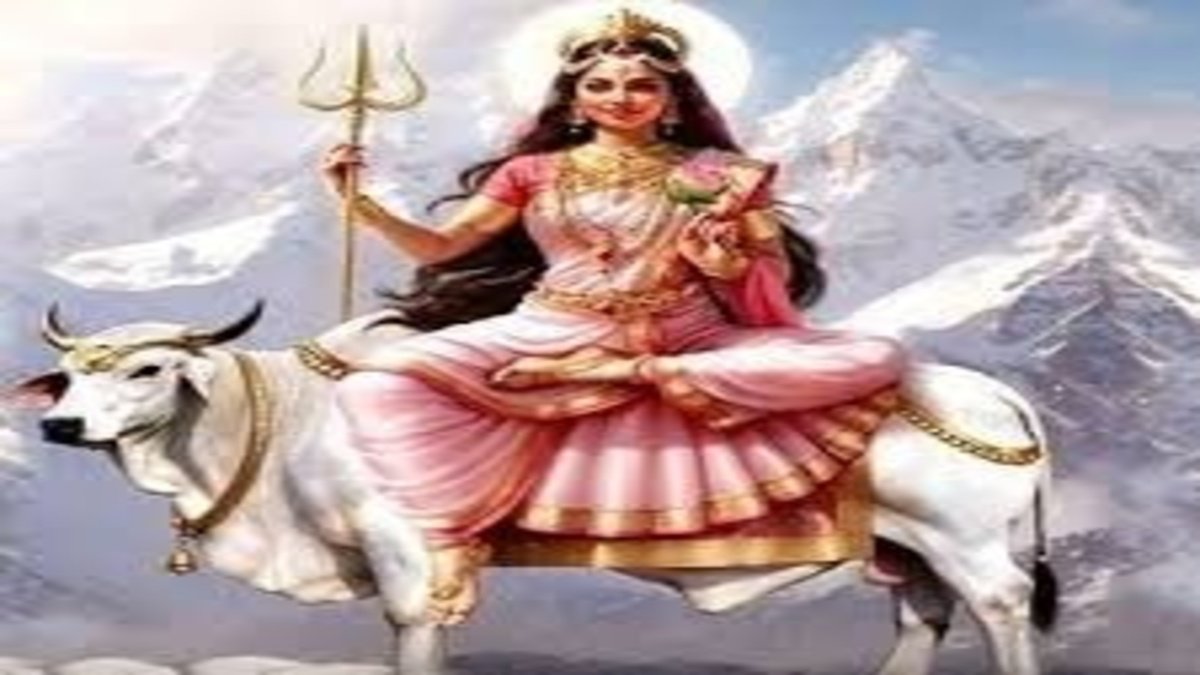
Navratri Goddess Shailputri: On the first day of Navratri, Goddess Shailputri, the first form of Goddess Durga, is worshipped. ‘Shail’ means mountain, and ‘putri’ means daughter. She was born as the daughter of the mountain king Himalaya, giving her the name Shailputri. She is also known as Parvati and Hemvati. Goddess Shailputri is considered a symbol of eternal good fortune, courage, and perseverance.
Deity rides a bull
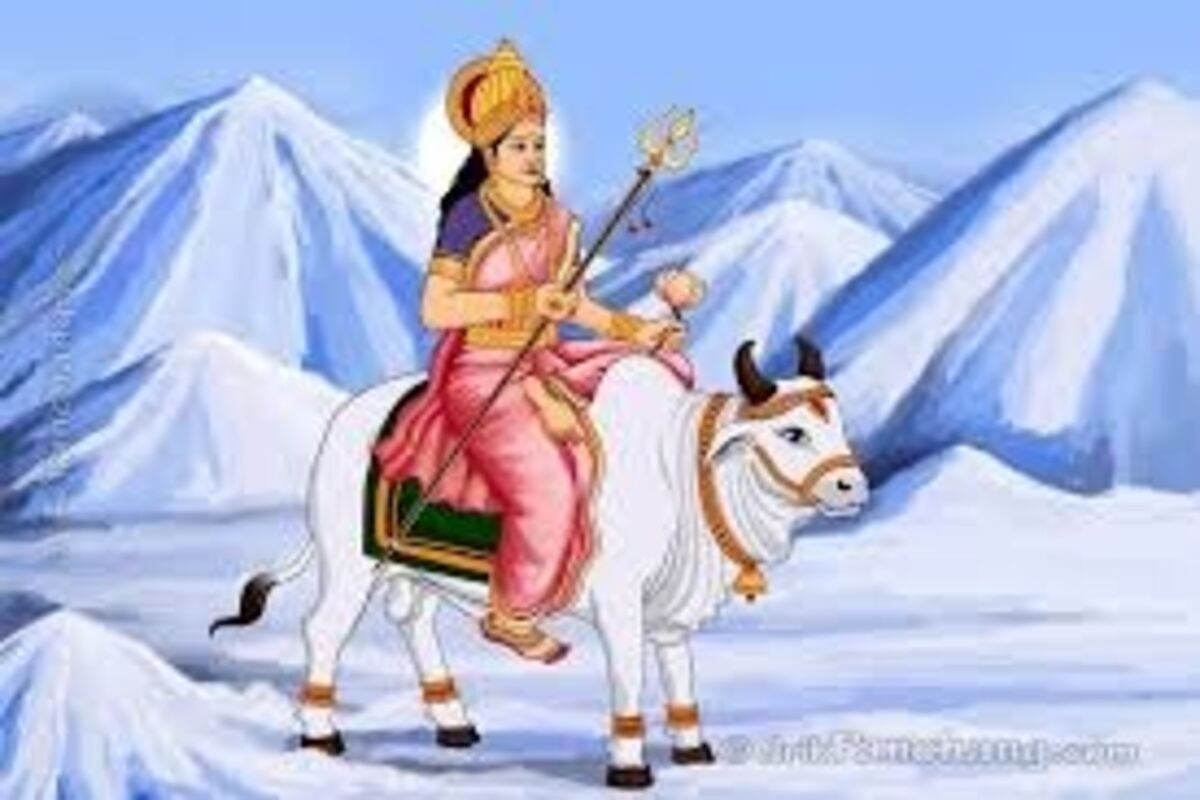
Goddess Shailputri’s form is extremely gentle, calm, and compassionate. She rides on a bull (Vrisharudha). Because of her riding on a bull, she is also known as ‘Vrisharudha’. The bull is considered a symbol of dharma (righteousness). Goddess Shailputri has two arms. Her right hand holds a trident, which destroys enemies and removes the three afflictions (spiritual, physical, and divine). In her left hand, she holds a lotus flower, symbolizing knowledge, purity, and peace. She often wears white or yellow clothes (this may vary according to regional beliefs; in many places, she is depicted wearing yellow clothes because yellow is considered the auspicious color for the first day). She has a crescent moon on her forehead, symbolizing coolness and divine knowledge. She is adorned with divine ornaments.
Godess Shailputri’s worship associated with Muladhara Chakra
In the path of Yoga, it is believed that on the first day of Navratri, the mind of the practitioner is situated in the ‘Muladhara Chakra’. Worship of Maa Shailputri awakens this chakra, which gives the devotee stability and spiritual power. The mythological story of Maa Shailputri is Goddess Shailputri awakens this chakra, bestowing stability and spiritual strength upon the devotee. The mythological story of Goddess Shailputri is linked to her previous life, when she was the daughter of Prajapati Daksha, named Sati. Sati was married to Lord Shiva. Once, Prajapati Daksha organized a grand yajna (sacrifice), inviting all the gods and goddesses, but deliberately withheld invitations for his son-in-law, Lord Shiva, and his daughter, Sati.
When Sati saw other gods arriving at the yajna through the sky, she insisted on attending it with Lord Shiva. Shiva explained the consequences of going uninvited, but Sati was desperate to return to her father’s home. Ultimately, Shiva granted her permission. Upon arriving at the yajna site, her father, Daksha, and her other sisters mocked her and spoke disrespectfully of Lord Shiva. Unable to bear the grave insult to her husband, Sati became extremely angry and grief-stricken.
She immediately jumped into the sacred fire of the yajna and sacrificed her life. In her next life, Sati was born as the daughter of the mountain king Himalaya, and was named Shailputri. In this life too, she performed rigorous penance to win Lord Shiva as her husband, and ultimately remarried him. This means that Shailputri is now Parvati. The story of Shailputri and her significance are primarily found in Shakti worship texts. The detailed description of the story of Maa Shailputri and the forms of Navadurga is found in ‘Shri Durga Saptshati’ (which is a part of Markandeya Purana) and ‘Devi Bhagwat Purana’. The names of Navdurgas are mentioned in the ‘Kavach’ text of Durga Saptashati, in which the name of Maa Shailputri comes first: “Pratham Shailputri Cha Dwitiyam Brahmacharini ॥” ” प्रथम शैलपुत्री च द्वितीया ब्राह्मचारिणी ”
To please Maa Shailputri, devotees perform these rituals:
- Prayer Mantra (for meditation) : II वन्दे वाञ्छितलाभाय चन्द्रार्धकृतशेखराम् । वृषारूढां शूलधरां शैलपुत्रीं यशस्विनीम II
I salute her whose peak is made of half a moon for the attainment of the desired object The illustrious daughter of the mountains was seen riding on a bull and carrying a trident
Meaning: For the desired benefits, I worship Mother Shailputri, whose forehead is adorned with the crescent moon, who is seated on a bull, who holds a trident in her hand and who is extremely famous.
- The main worship mantra
II ॐ देवी शैलपुत्र्यै नमः ॥
(Chanting this mantra 108 times is considered extremely auspicious.)
Worshiping Goddess Shailputri on the first day of Navratri brings stability to the devotee’s life, dispels fear, and gives them the strength to face all challenges.

 Rohan Umak